
Bagudu: Nigeria’s Budget Remains Too Small to Meet Development Needs
E-ISSN: 2354-4481
By Moses Anele
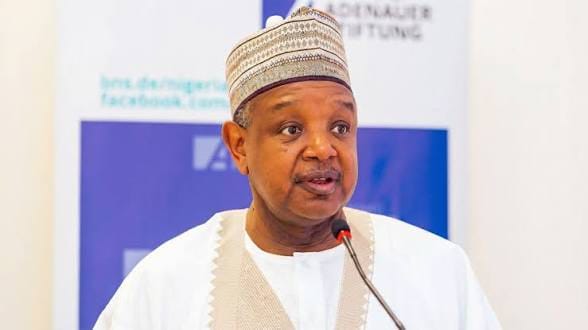
ABUJA — Minister of Budget and Economic Planning, Senator Abubakar Bagudu, has said Nigeria’s national budget remains relatively small when compared with the budgets of other highly populated countries, warning that the country’s current fiscal capacity is inadequate to meet its development needs.
Bagudu made the statement during an official engagement in Abuja, where he highlighted the gap between Nigeria’s population and the resources available to finance infrastructure, public services and other development priorities.
According to the minister, Nigeria is among the world’s 10 most populous countries but operates with a comparatively limited national budget. He said the disparity raises concerns about the country’s ability to finance the scale of economic and infrastructural development required to support its growing population.
Bagudu noted that countries with populations comparable to Nigeria’s generally have access to substantially larger public budgets, giving their governments greater capacity to invest in infrastructure and other sectors of the economy.
He said Nigeria’s limited fiscal space remains a major constraint on government’s ability to respond adequately to the country’s development challenges.
The minister urged Nigerians to broaden discussions around the nation’s economic challenges beyond disagreements over individual budgetary or legislative issues.
He said attention should instead be directed towards the broader question of whether the resources currently available to the government are sufficient to deliver meaningful economic transformation.
Bagudu stressed that the size of Nigeria’s economy and population requires a corresponding expansion in government revenue and investment capacity.
He identified aggressive revenue mobilisation as a critical component of efforts to strengthen the country’s fiscal position and provide additional resources for development.
The minister said expanding the nation’s revenue base would enable government to increase investment in infrastructure and other areas considered essential to long-term economic growth.
He also emphasised the need for a broad national consensus on improving Nigeria’s capacity to generate revenue and mobilise resources for development.
According to him, sustainable economic transformation cannot be achieved solely through adjustments to existing allocations when the overall pool of available resources remains limited.
Bagudu’s comments come amid continuing discussions over Nigeria’s fiscal position, public spending and the ability of government to finance major infrastructure and development programmes.
Nigeria has one of Africa’s largest populations, creating substantial demands for roads, electricity, healthcare, education, housing, transportation and other public services.
The minister’s position suggests that increasing the resources available to government is central to addressing these demands and creating the fiscal capacity needed to implement large-scale development programmes.
He therefore called for greater attention to revenue generation and investment expansion as part of efforts to build a more competitive Nigerian economy.
Bagudu maintained that strengthening the country’s fiscal capacity would be necessary if Nigeria is to meet its long-term infrastructural ambitions and provide the level of public investment required to support sustainable economic growth.
He said the conversation around Nigeria’s development should consequently focus not only on how existing resources are distributed but also on how the country can substantially increase the resources available for investment.
The minister’s remarks place revenue mobilisation at the centre of the broader debate on Nigeria’s economic transformation, particularly as the government seeks to expand infrastructure and improve public services amid significant fiscal constraints.