
CHIEF SENATOR FRANCIS ARTHUR NZERIBE: THE ENIGMATIC POLITICAL TITAN NIGERIA WILL NEVER FORGET
"The fear of death was the beginning of fairness."
E-ISSN: 2354-4481
By John Mbonu Uchenwoke-Ekperechi Publisher Editor-in-Chief Inside Agwa News
Few statements capture the personality of Chief Senator Francis Arthur Nzeribe more vividly than those immortal words. They were not merely a philosophical expression; they reflected his worldview, his understanding of power, and his approach to politics.
The quote, prominently inscribed at the entrance of his sprawling country residence, Haven of Peace (Mkpu Udo) in Oguta, symbolized the paradox of a man who combined immense wealth with political audacity, philanthropy with controversy, and influence with enduring public debate.
The inscription on the gate of his magnificent estate spoke of peace, yet the man behind it was rarely far from political turbulence. Even so, Nzeribe consistently argued that fairness could only thrive where injustice was effectively challenged. Whether one agreed with his methods or not, he remained steadfast in his convictions.
More than three years after his passing, Chief Senator Francis Arthur Nzeribe remains one of the most fascinating and polarizing figures in Nigeria's political history. His life traversed business, diplomacy, legislative service, political activism and kingmaking, leaving behind a legacy that continues to provoke admiration, criticism and reflection.
Perhaps his famous declaration also presents a challenge to Nigeria itself. The nation continues to grapple with questions of equity, justice and inclusion. Until fairness occupies a central place in public life and governance, Nigeria's democratic aspirations may never be fully realized.
From Oguta to International Business
Born on 2 November 1938 into the renowned Nzeribe family of Oguta, present-day Imo State, Francis Arthur Nzeribe displayed ambition from an early age. He attended Bishop Shanahan College, Orlu, and Holy Ghost College, Owerri, before proceeding to England on scholarship to study marine engineering.
His professional career began briefly with multinational oil companies Shell and Gulf Oil. However, it was entrepreneurship that eventually defined his early success. Through the Fanz Organisation, he built an international business empire spanning construction, oil brokerage, insurance, publishing and real estate.
By the late 1970s, Arthur Nzeribe had established himself among Nigeria's wealthiest businessmen, joining the league of self-made millionaires at a remarkably young age. His wealth became legendary, reflected most visibly in his expansive country home, Haven of Peace (Mkpu Udo), in Oguta—a magnificent estate whose imposing architecture still ranks among Nigeria's most remarkable private residences.
Beyond commerce, Nzeribe also ventured into international public relations. Historical accounts indicate that he developed close working relationships with several African leaders. Through the Ghana High Commission in London, he reportedly met President Kwame Nkrumah of Ghana and later worked with his administration in public relations.
Following Nkrumah's overthrow in 1966, General Joseph Arthur Ankrah's government equally retained Nzeribe's public relations services through his firm, JEAFAN, to improve its international image. Although his influence in Ghana diminished after Ankrah left office, the experience expanded his political networks across Africa and shaped his understanding of continental politics.
The Political Journey Begins
Arthur Nzeribe formally entered Nigerian politics during the Second Republic under the banner of the Nigeria Peoples Party (NPP), led by Dr. Nnamdi Azikiwe.
His defining breakthrough came during the fiercely contested 1983 general elections when he sought election to represent Orlu Senatorial District, now known as Imo West Senatorial District.
Reports suggest that he invested an unprecedented ₦12 million into that campaign—an enormous sum at the time—which underscored both his financial strength and determination to secure victory.
The election itself was fiercely contested against the ruling National Party of Nigeria (NPN). Nzeribe approached the contest with characteristic boldness, declaring publicly that he would "match rigging with rigging, naira with naira, fire with fire, stockfish with stockfish and thuggery with thuggery."
It was vintage Arthur Nzeribe—colourful, provocative and impossible to ignore.
His campaign also demonstrated an unusual attention to election security. A helicopter reportedly hovered over the collation centre throughout the exercise, signalling both his presence and his resolve to protect the electoral process as he understood it.
Recalling that historic election years later in an interview with The Guardian, Nzeribe offered an extraordinary account of what transpired.
"On election day I had 10,000 men in uniform. My men were waiting for them outside the town hall and I was outnumbering the police there four to one. I told the Returning Officer and the Assistant Commissioner of Police,
'Just tamper with my result, look outside, none of us is going home alive. Just look outside. I outnumber you four to one. You can do what you like in this hall. None of us will get out here alive. You had all the chance to campaign. You had all the chance to rig. You didn't do any of that.
'Now you want to hijack. So what do you do if somebody wants to hijack your thing? Stop him, not so? So I stopped them!'
"The votes were correctly counted, correctly collated, and correctly announced. Nzeribe won. The fear of death was the beginning of fairness."
Whether interpreted as political realism or an unsettling commentary on Nigeria's electoral culture, the statement has since become one of the most quoted remarks in Nigerian political history.
Unfortunately, his first tenure in the Senate proved short-lived. The military coup of 31 December 1983 brought the Second Republic to an abrupt end, terminating the mandates of elected officials across the country.
The Military Years and the June 12 Controversy
Unlike many politicians who disappeared from public life during military rule, Arthur Nzeribe remained politically active.
His most controversial intervention came in 1993 when he founded the Association for Better Nigeria (ABN), a political pressure group that challenged the conduct of the June 12 presidential election.
ABN obtained a controversial court injunction seeking to halt the election. After Nigerians voted, the organization also supported the annulment of the election by the military government of General Ibrahim Babangida.
The election was widely believed to have been won by Chief Moshood Kashimawo Olawale Abiola.
For many Nigerians, particularly pro-democracy activists, Nzeribe's role in the June 12 saga permanently altered public perception of him. To critics, he became one of the principal civilian actors associated with the interruption of Nigeria's democratic transition.
His supporters, however, argued that he merely pursued what he believed to be lawful political options within the prevailing constitutional framework.
Whatever perspective one adopts, the June 12 episode remains inseparable from any honest assessment of Arthur Nzeribe's political legacy.
Return to Democratic Politics
Following Nigeria's return to democratic rule in 1999, Nzeribe staged another remarkable political comeback.
He was elected Senator representing Imo West Senatorial District on the platform of the Peoples Democratic Party (PDP).
His return demonstrated both his resilience and enduring grassroots influence.
Re-elected in 2003, he served until 2007, becoming one of the Senate's most outspoken and independent voices.
Throughout his legislative career, he served on several Senate committees and regularly challenged prevailing opinions within the National Assembly.
His refusal to conform easily to political establishments often made him both influential and controversial.
Beyond Abuja, he remained one of the most formidable political power brokers in Imo State and across the South-East, where aspiring politicians frequently sought his endorsement and strategic guidance.
Battles Within the Senate
Arthur Nzeribe's Senate years were not without conflict.
In 2002, Senate President Anyim Pius Anyim suspended him indefinitely following allegations connected to a ₦22 million fraud investigation.
Nzeribe vigorously denied any wrongdoing.
He insisted the suspension was politically motivated, arguing that it resulted from his efforts to mobilize senators in support of impeachment proceedings against the Senate President.
Whether viewed as political persecution or legislative discipline, the episode further reinforced his reputation as an unconventional politician unwilling to avoid confrontation.
Political headwinds intensified in 2006.
Within his home constituency, opposition against his continued representation grew considerably.
The Orlu People's Consultative Assembly, reportedly backed by then Imo State Governor Chief Achike Udenwa, organized what was described as a "One Million Man March" demanding his recall from the Senate.
Later that year, he lost the PDP senatorial primary election to Osita Izunaso, effectively bringing his legislative career to a close.
The Kingmaker After Office
Leaving the Senate did not diminish Arthur Nzeribe's political relevance.
Rather, he evolved into one of the country's respected political strategists and kingmakers.
He mentored numerous younger politicians, advised political leaders privately and continued to influence political alignments in Imo State.
His experience and extensive network ensured that his counsel remained highly sought after across party lines.
He also served on the Board of Trustees of the Peoples Democratic Party, contributing to internal party affairs and national political conversations.
Although he no longer occupied elective office, his influence remained unmistakable.
An Author and Political Thinker
Away from active politics, Nzeribe committed many of his reflections to writing.
His published works included Nigeria I Believe, Nigeria: The Turning Point, Nigeria: Another Hope Betrayed and Nigeria: Seven Years After Shehu Shagari.
Through these books, he articulated his perspectives on governance, democracy, national development and Nigeria's evolving political challenges.
Whether readers agreed with his conclusions or not, the publications demonstrated his enduring interest in shaping national discourse beyond partisan politics.
A Legacy of Contrasts
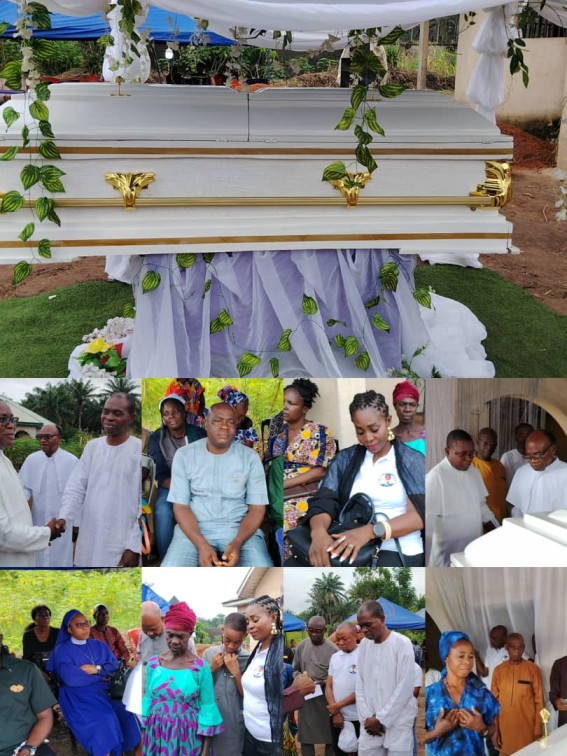
Chief Senator Francis Arthur Nzeribe passed away on 8 May 2022 at the age of 83. His death attracted diverse reactions from across Nigeria. Many remembered his extraordinary generosity, immense business accomplishments and unwavering support for countless individuals whose educational, financial and political aspirations he helped nurture.
Others reflected on his controversial political decisions, particularly his association with the annulment of the June 12 election.
Such divided opinions perhaps best capture the complexity of his life.
He was simultaneously admired and criticized, celebrated and questioned.
Yet few would dispute his significance.
Arthur Nzeribe occupied a unique place in Nigeria's political evolution.
He influenced elections, shaped political alliances, mentored leaders, challenged institutions and remained consistently relevant across multiple political dispensations.
His story illustrates both the possibilities and contradictions that have characterized Nigeria's democratic journey. History rarely remembers only those who were universally loved; it often remembers those whose actions fundamentally altered political conversations. Chief Senator Francis Arthur Nzeribe unquestionably belonged to that category.
Whether regarded as an astute strategist, an uncompromising realist, an influential philanthropist or one of Nigeria's most controversial politicians, his imprint on the nation's political landscape remains indelible.
His famous declaration—"The fear of death was the beginning of fairness"—continues to resonate, not merely as a personal philosophy but as a provocative commentary on power, justice and the Nigerian political experience.
As Nigeria continues its democratic journey, the life of Arthur Nzeribe reminds the nation that history is rarely written in black and white. It is often composed in shades of complexity, where remarkable achievements coexist with enduring controversies.