
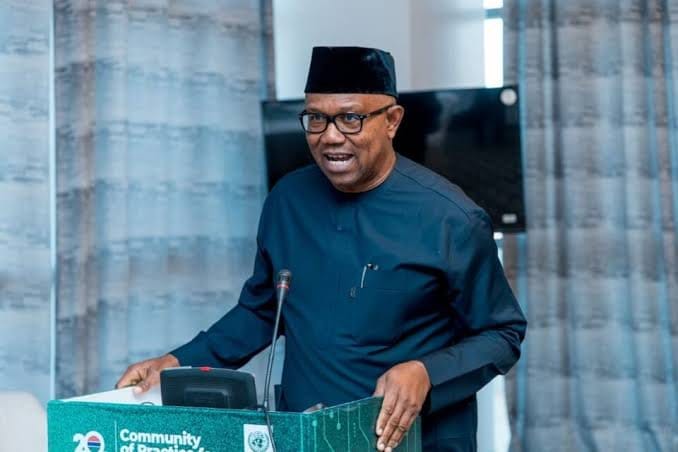
Peter Obi to Retain Floating Exchange Rate If Elected in 2027
E-ISSN: 2354-4481
By Grace Chidimma Ibe
Presidential candidate of the National Democratic Congress (NDC), Peter Obi, has said he will retain the floating exchange-rate policy introduced by the administration of President Bola Tinubu if elected president in 2027.
Obi made the position known in a recent interview that has gone viral on social media, where he explained that his administration would not seek to artificially reverse the naira's current exchange-rate position or forcibly return the currency to previous levels such as about ₦350 to the dollar.
According to the former Anambra State governor, Nigeria's exchange-rate challenges should not be addressed primarily through artificial intervention or attempts to maintain an unrealistic value for the naira.
Instead, Obi said his administration would focus on strengthening the productive capacity of the Nigerian economy, arguing that increased domestic production would provide a more sustainable foundation for a stronger and more stable currency.
He stressed that economic growth should be driven by productivity, investment and increased output rather than policies designed merely to manipulate the exchange rate.
Obi's position represents a continuation of the floating exchange-rate framework currently adopted by the Federal Government, under which the value of the naira is largely determined by market forces.
The policy has remained one of the major economic issues in Nigeria, particularly following the significant depreciation of the naira and its impact on the cost of imported goods, inflation, businesses and household purchasing power.
While critics of the floating exchange-rate regime have called for stronger intervention to support the naira, Obi argued that defending the currency without addressing the underlying weaknesses in the economy would not provide a lasting solution.
He maintained that Nigeria must increase what it produces locally and reduce excessive dependence on imports if the country is to achieve meaningful currency stability.
The NDC presidential candidate also linked the strength of the naira to the overall health of the economy, suggesting that a productive economy capable of generating more goods, services and foreign exchange would ultimately create stronger conditions for the currency.
Rather than promising Nigerians a return to a particular historical exchange rate, Obi's approach places emphasis on creating the economic conditions that could naturally improve the value of the naira.
The statement is expected to generate further debate ahead of the 2027 presidential election, as economic management, inflation, exchange rates and the cost of living remain central issues for Nigerian voters.
Obi has consistently campaigned on the need to move Nigeria from what he describes as a consumption-driven economy toward a production-oriented economy.
His latest comments therefore suggest that, if elected, his administration would seek to work within a market-based exchange-rate system while using increased productivity and economic expansion as key instruments for improving the country's economic stability.
The 2027 election is expected to feature intense debate over the direction of Nigeria's economic policies, particularly the management of the naira, foreign exchange, inflation, employment and domestic production.