
TCN Expands Transmission Capacity to 8,700MW, Seeks Stronger Investments for Stable Power Supply
By Njoku Mercy Ginika
E-ISSN: 2354-4481
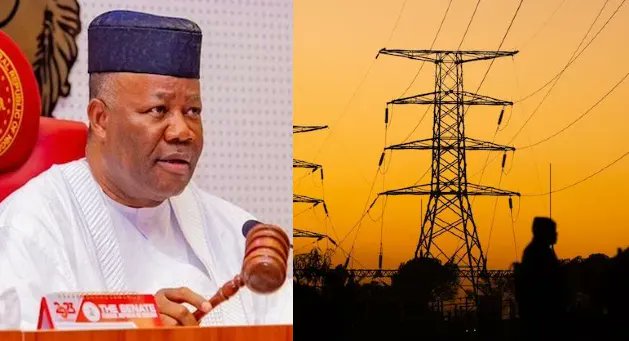
The Managing Director and Chief Executive Officer of the Transmission Company of Nigeria (TCN), Engineer Sule Ahmed Abdulaziz, has announced that the country's electricity transmission wheeling capacity has increased to 8,700 megawatts (MW), significantly above the highest power generation and delivery record of 5,801.84MW achieved on the national grid.
Speaking during a four-day parliamentary and stakeholders' engagement summit on power sector reforms in Nigeria, Abdulaziz said the transmission network has consistently wheeled all available electricity generated, demonstrating its readiness to support higher levels of power supply as generation capacity improves.
He explained that TCN has increased the nation's bulk electricity wheeling capacity from approximately 7,000MW to 8,700MW, representing an additional 1,700MW of transmission capability. According to him, the expansion was made possible through strategic investments by the Federal Government and development partners.
Abdulaziz highlighted that on March 4, 2025, Nigeria recorded a historic peak transmission of 5,801.84MW and a record daily energy delivery of 128,370.75 megawatt-hours (MWh), describing the achievement as evidence of the growing strength and reliability of the country's transmission infrastructure.
He disclosed that between January 2024 and November 2025, TCN commissioned 82 transformers, adding about 8,500MVA of transformation capacity nationwide. The company also completed several substations and transmission line projects aimed at improving grid reliability, operational flexibility, and redundancy across the country's six geopolitical zones.
The TCN boss further revealed that the company has secured more than $1.4 billion in development financing from the World Bank, the African Development Bank (AfDB), and the Japan International Cooperation Agency (JICA) to support ongoing transmission expansion and modernization projects across Nigeria.
According to Abdulaziz, the company is also implementing a nationwide Supervisory Control and Data Acquisition (SCADA) system to accelerate grid digitalisation. The project is expected to provide real-time network monitoring, improve fault management, enhance dispatch efficiency, and lay the foundation for future smart-grid operations.
He said these achievements reflect TCN's commitment to strengthening Nigeria's transmission infrastructure, improving grid reliability, and positioning the electricity sector for increased generation and distribution.
Despite the progress, Abdulaziz acknowledged that vandalism and sabotage of transmission facilities remain major challenges affecting the sector. He noted that such activities disrupt electricity supply, increase maintenance costs, and threaten critical investments.
He stressed the need for stronger security measures, greater community participation, and stricter enforcement of laws to safeguard national electricity infrastructure. He also identified encroachment on transmission rights-of-way as a growing concern, warning that it creates safety hazards, complicates maintenance operations, and limits future network expansion.
The TCN chief observed that substantial capital investment remains essential for further grid expansion. While several transmission projects are ready for implementation, he said financing limitations, foreign exchange pressures, and counterpart funding requirements continue to slow project execution.
He emphasized that unlocking Nigeria's full electricity generation potential will require coordinated investments across the entire power value chain, including generation, transmission, gas supply, and distribution infrastructure.
Abdulaziz maintained that although TCN has successfully expanded transmission capacity to 8,700MW, improved electricity generation, reliable fuel supply to power plants, and stronger distribution networks are equally necessary to deliver more stable power to consumers nationwide.
He added that the long-term sustainability of the electricity sector depends on a financially viable market supported by cost-reflective tariffs, improved revenue collection, stronger payment discipline, and a stable regulatory environment capable of attracting both local and international investment.
The TCN boss also identified land acquisition processes and community engagement issues as factors delaying the completion of several transmission projects. He recommended streamlined approval procedures, fair compensation frameworks, and structured stakeholder engagement to accelerate infrastructure delivery.
According to him, addressing these challenges will require coordinated efforts involving the government, regulators, security agencies, electricity market participants, host communities, and development partners to strengthen Nigeria's power sector and improve electricity access for citizens.
Your Opinion Matters
Did this news report meet your expectations?
How can we improve our coverage and better serve you?
Leave your comments and suggestions below.