

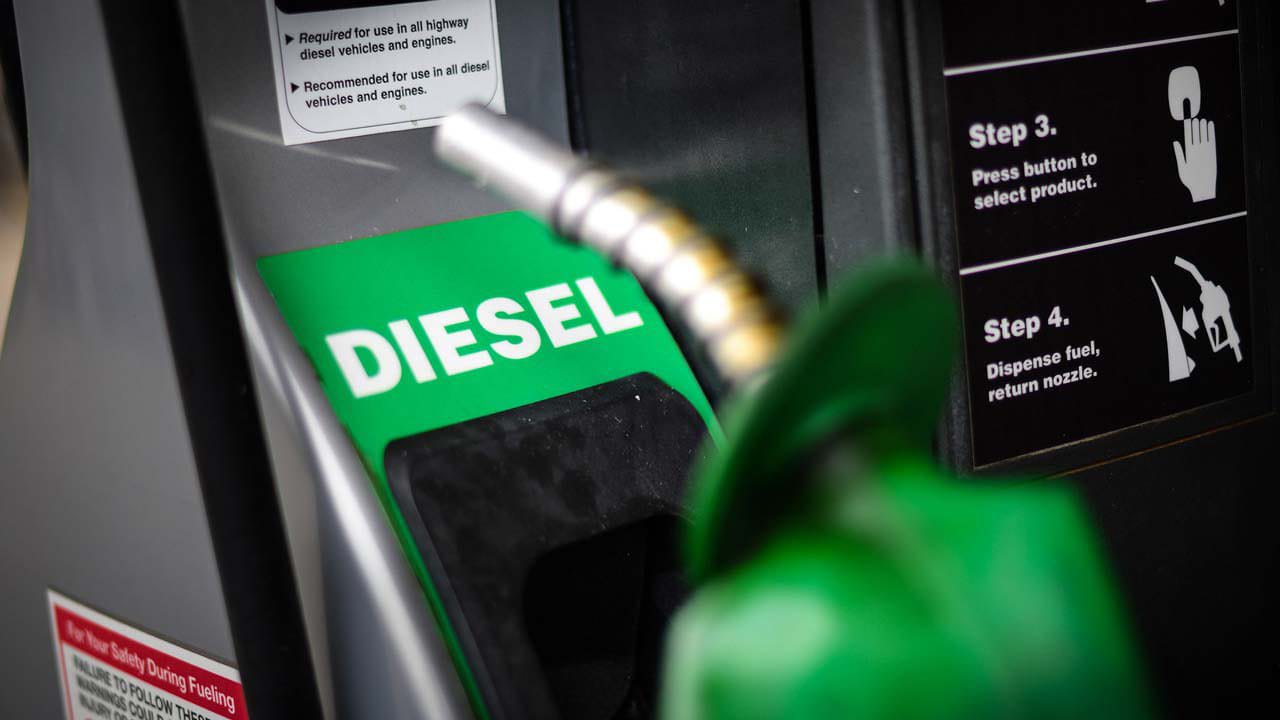
Diesel Price Jumps to ₦1,450/Litre as Global Oil Rally Pushes Up Costs
E-ISSN: 2354-4481
By Ajoku Marylaw
Diesel Price Jumps to ₦1,450/Litre as Global Oil Rally Pushes Up Costs
Nigerian depot owners and petroleum marketers have increased the ex-depot price of Automotive Gas Oil (diesel) from ₦1,410 per litre to ₦1,450 per litre, representing a 2.8 per cent increase within 24 hours as global crude oil prices continue to rise amid renewed geopolitical tensions in the Middle East.
The latest adjustment, which took effect on Wednesday, is expected to trigger higher pump prices at filling stations nationwide, further increasing transportation, production and logistics costs for businesses and households already grappling with inflation.
Industry sources said the increase was driven by the sharp rise in international crude oil prices, with Brent crude climbing to $78.36 per barrel, up 5.66 per cent, while West Texas Intermediate (WTI) gained 5.48 per cent to trade at $74.30 per barrel.
The increase reflects the sensitivity of Nigeria's deregulated downstream petroleum market to global price movements, where fluctuations in crude oil prices and foreign exchange rates are quickly transmitted to domestic fuel prices.
Marketers noted that although diesel is fully deregulated, changes in international market conditions have continued to influence the cost of imports and local distribution, resulting in frequent price adjustments across depots.
Several depot operators in Lagos and other major distribution centres reportedly revised their loading prices upward on Wednesday, with independent marketers expected to adjust retail pump prices accordingly.
The latest development comes as businesses across key sectors, including manufacturing, construction, agriculture, telecommunications and transportation, rely heavily on diesel to power operations due to persistent electricity supply challenges.
Many transport operators expressed concern that the new diesel price would inevitably translate into higher transport fares.
A commercial bus driver in Lagos, Ibrahim Musa, said transport operators have little choice but to review fares if fuel costs continue to rise.
"We buy diesel almost every day to keep our vehicles running. Every increase affects our daily expenses. If prices continue like this, passengers should expect higher fares," he said.
Similarly, a haulage operator in Port Harcourt, Chinedu Nwosu, described the increase as another setback for logistics companies already battling rising operating costs.
"Moving goods across the country has become more expensive. Diesel accounts for a significant portion of our operating expenses, and every increase eventually affects the prices consumers pay for goods," he stated.
Commuters also lamented the latest increase, saying they were already struggling with the high cost of living.
A civil servant in Abuja, Blessing Okeke, said frequent increases in fuel prices continue to erode workers' purchasing power.
"Our salaries have remained the same while transport fares keep rising. Every increase in diesel eventually affects everyone because it raises the cost of moving people and goods," she said.
Economic analysts warned that the latest diesel price increase could add further pressure to Nigeria's inflation rate, especially through higher transportation and production costs.
Financial analyst Emeka Eze observed that diesel remains one of the most critical energy sources for businesses across Nigeria.
"When diesel prices rise, manufacturers spend more on production, transporters spend more on logistics, and these additional costs are transferred to consumers. This contributes to inflation and weakens purchasing power," he explained.
Energy economist Dr. Yusuf Bello noted that although Nigeria is an oil-producing country, domestic fuel prices remain largely influenced by international market dynamics because of deregulation and the country's continued dependence on imported petroleum products.
He added that sustained increases in global crude prices could keep domestic diesel prices elevated unless there is improved local refining capacity and greater market competition.
The latest price adjustment follows renewed uncertainty in the international oil market, where geopolitical developments have heightened concerns over potential supply disruptions. Traders have responded by pushing crude prices higher, with ripple effects already being felt across several fuel markets worldwide.
Industry stakeholders believe that continued volatility in global energy markets may result in additional price adjustments if crude prices remain elevated in the coming weeks.
The development also comes at a time when many Nigerians are facing rising food prices, increasing transportation costs and higher electricity expenses, leaving households under mounting financial pressure.
Businesses dependent on diesel-powered generators have equally expressed fears that operating costs may rise further, particularly in sectors where electricity supply remains unreliable.
Experts say improving domestic refining capacity through facilities such as the Dangote Refinery and government-owned refineries could help reduce Nigeria's exposure to international supply shocks over time. However, they cautioned that global crude oil prices would still influence petroleum product pricing under a deregulated market system.
For now, marketers say consumers should expect diesel prices to remain volatile, depending on developments in the international oil market, exchange rate movements and supply conditions.
The latest increase reinforces concerns over the vulnerability of Nigeria's economy to external energy shocks and the broader impact such developments could have on inflation, transportation costs and economic growth.