
FG Seeks Seven-Year Freeze On New Federal Universities, Polytechnics, Colleges Of Education
E-ISSN: 2354-4481
By Valentin Eze
The Federal Government has appealed to the National Assembly to suspend the approval of bills seeking the establishment of new federal universities, polytechnics and colleges of education across the country for seven years.
The government said the proposed moratorium would enable it to address persistent funding challenges, improve infrastructure and strengthen existing tertiary institutions before considering further expansion of the country's higher education system.
The appeal was contained in a memorandum dated November 2, 2026, issued by the Federal Ministry of Education and addressed to the President of the Senate, Senator Godswill Akpabio.
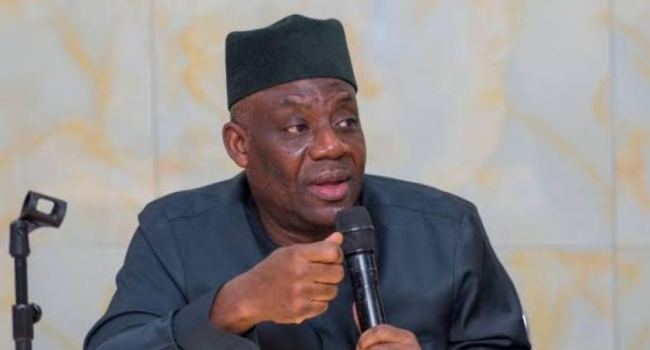
In the memo, the Minister of Education, Dr Tunji Alausa, urged the National Assembly to support the Federal Government's seven-year moratorium on the establishment of new federal tertiary institutions.
Alausa disclosed that the Federal Executive Council approved the policy at its meeting on August 13, 2025, as part of efforts to address the growing number of public tertiary institutions, duplication of academic programmes, underutilisation of facilities and inadequate government funding.
According to the minister, Nigeria's major challenge is no longer simply expanding access to tertiary education but improving the quality, capacity and sustainability of existing institutions.
He identified inadequate lecture halls, overcrowded classrooms, insufficient laboratories, shortages of qualified academic personnel, limited student accommodation and deteriorating infrastructure as some of the major problems confronting federal universities, polytechnics and colleges of education.
He argued that establishing additional institutions without adequately addressing these challenges could further stretch the government's limited financial resources and undermine the quality of education.
The minister also highlighted the Federal Government's outstanding financial commitments to public universities, particularly under the 2013–2018 agreement with the Academic Staff Union of Universities (ASUU).
He said the government committed ₦1.3 trillion to university revitalisation under the agreement but released only ₦250 billion between 2013 and 2021.
Alausa further disclosed that although an additional ₦150 billion was approved in 2025 for Needs Assessment Intervention, only ₦50 billion was initially released.
He maintained that the funding gaps raised serious concerns about the government's ability to meet existing obligations while assuming the additional financial responsibilities associated with establishing new institutions.
The education minister cited Ekiti and Imo states as examples of the difficulties associated with establishing multiple tertiary institutions without sustainable funding arrangements.
He recalled that three state-owned universities in Ekiti were merged into one institution, Ekiti State University, Ado-Ekiti, in 2011.
He also referenced institutional reviews and integration exercises in Imo State following the establishment of several tertiary institutions under previous administrations.
According to him, some state governments have also approached the Federal Government to take over their universities because of difficulties sustaining their operations.
Alausa noted that countries such as Australia, Finland, Japan, the United States and South Africa had implemented institutional mergers and consolidation measures to eliminate duplication, improve administrative efficiency and optimise public spending.
He said Nigeria could adopt similar approaches by prioritising the sustainability and effectiveness of existing institutions rather than continuously increasing their numbers.
The minister also listed other critical education programmes requiring substantial and sustained government investment, including projects funded by the Tertiary Education Trust Fund (TETFund), the Nigerian Education Loan Fund (NELFUND), vocational and skills acquisition initiatives, as well as personnel allowances for academic and non-academic staff.
He explained that establishing a tertiary institution involved more than securing legislative approval, noting that government must provide land, buildings, equipment, take-off grants, qualified personnel, utilities and adequate operational funding.
He warned that institutions established without proper planning and guaranteed funding could become financial liabilities for future administrations, potentially resulting in mergers, restructuring or closure.
However, Alausa clarified that the proposed seven-year moratorium was not intended to permanently prohibit the establishment of new institutions or restrict Nigerians' access to higher education.
Rather, he said the policy was designed to provide sufficient time for the government to strengthen existing institutions and ensure that future expansion was guided by demonstrable educational needs and sustainable funding arrangements.
He consequently appealed to Senate President Godswill Akpabio and other leaders of the National Assembly to exercise restraint in considering bills seeking the establishment of new federal universities, polytechnics and colleges of education throughout the proposed seven-year period.
The minister stressed that the success of Nigeria's education sector should be measured by the quality of teaching, the competence of graduates and the contribution of institutions to national development, rather than the number of tertiary institutions established.
The memorandum was also copied to the Senate Majority Leader, Senator Michael Opeyemi Bamidele.