NYSC: Imo-Born Graduate Vows to Make Lasting Impact During Service Year in Delta
ISSN: 2354-4481
By James Ofili
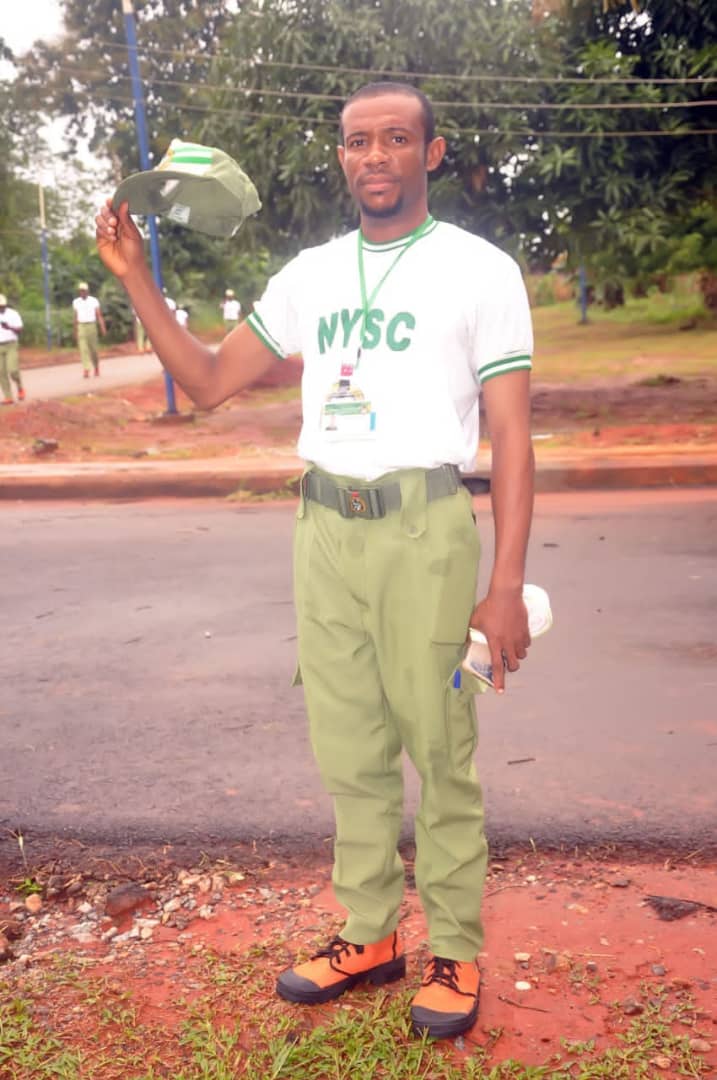
DELTA STATE, NIGERIA — Maduakolam Chibueze Collins, a graduate of Machenic Engineering from the Federal Polytechnic Nekede, Owerri, Imo State, has expressed his determination to make his compulsory National Youth Service Corps (NYSC) year meaningful by contributing to the development of the community where he is currently serving in Delta State.
Collins, who hails from Umuofeke in Agwa Autonomous Community, Oguta Local Government Area of Imo State, is currently serving in Delta State, one of Nigeria’s oil-rich South-South states.
Rather than approaching the NYSC programme merely as a compulsory national assignment, the young graduate said he sees the service year as an opportunity to make a lasting difference in the lives of people, particularly children and residents in his host community.
According to him, one of his greatest motivations is the possibility of becoming the first graduate or corps member some children in his host community may have encountered closely.
“To be the first graduate/corper some kids have ever met. Teaching, health outreaches, or even starting a small skill class... people will remember me for years. Not just ‘another corper’, been the corper.”
Collins believes that meaningful service goes beyond reporting to a place of primary assignment and completing the required 11-month programme. He wants to use the period to identify practical problems around him and contribute to solving at least one of them.
He said living in a rural environment could also provide valuable lessons in resourcefulness, resilience and problem-solving.
“Village life will force me to be resourceful. Water wahala? I figure it out. No data? I read, plan CDS projects, I talk to people. By the time I am done, problem-solving skills are elite,” he said.
For Collins, the Community Development Service (CDS) component of NYSC presents an avenue for corps members to leave tangible footprints in their host communities.
He identified projects such as borehole provision, school renovation and health sensitisation as some of the initiatives corps members could undertake when properly motivated and supported.
“It’s easier to start something that matters there. Borehole, school renovation, health sensitization. Those projects are what get awards and recommendations after service,” he said.
Beyond formal projects and official recognition, Collins also expects his service year to provide memorable experiences and opportunities to build relationships with members of his host community.
He said he looks forward to the everyday experiences associated with rural NYSC deployment, including interactions with traditional leaders, schoolchildren and other residents.
“Every corper has ‘village NYSC gist’. The generator nights, the village head inviting you, the primary school kids calling you ‘oga’. Years later, that’s what I will laugh about,” he said.
A music minister and Christian with The Watchman Charismatic Revival Renewal Movement, Collins said his faith and personal values would also guide his approach to service and interaction with people.
He believes that genuine service requires humility, cultural understanding and a willingness to identify with the people rather than merely completing an official assignment.
Among his personal principles for the service year, he said, are: “Go in to serve, not to survive. People feel it.”
He also intends to learn some words from the local language of his host community as a way of building trust and earning the respect of residents.
“Learn three or four words in the local language. Instant respect,” he advised.
Collins further said he intends to identify one practical problem that he can realistically address within his 11-month service period and concentrate his energy on achieving measurable results.
“Find one problem I can actually solve in 11 months and focus there,” he said.
His approach reflects the broader objective of the NYSC programme, which seeks to promote national integration, youth development and community service by deploying Nigerian graduates to states other than their states of origin.
For Collins, however, the experience represents more than fulfilling a national obligation. He wants his deployment to Delta State to become an opportunity to serve, learn, build relationships and leave behind something that residents can remember long after his passing-out ceremony.
His ambition is simple: not to be remembered as just another corps member who came and left, but as “the corper” who made a difference.