

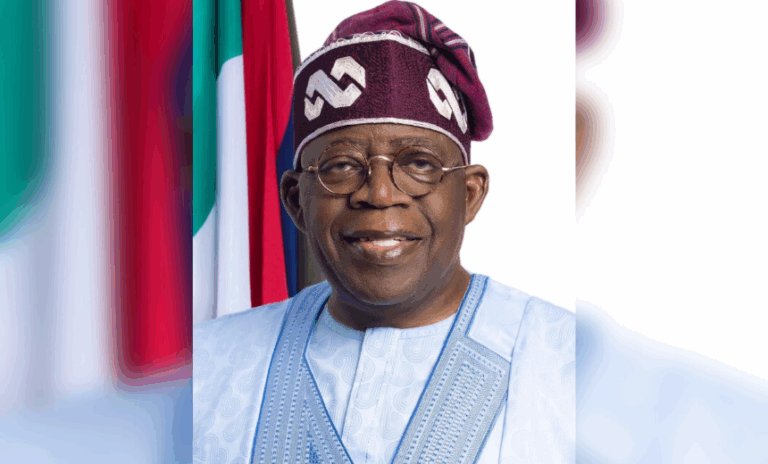
Tinubu Signs Executive Order to Regulate Cryptocurrency, Virtual Assets Sector
E-ISSN: 2354-4481
By Diamond Ifegwu
ABUJA — President Bola Ahmed Tinubu has signed a landmark Executive Order establishing a coordinated regulatory framework for virtual assets and cryptocurrency operations in Nigeria, a move widely seen as a major step toward strengthening the country's digital economy and providing regulatory clarity for investors and technology companies.
The Presidency announced on Friday that the Presidential Executive Order on Virtual Assets Coordination, 2026 takes immediate effect.
Under the new order, the Central Bank of Nigeria (CBN), the Nigeria Revenue Service (NRS) and the Securities and Exchange Commission (SEC) will work together to harmonise the regulation of virtual assets, cryptocurrency trading and other digital financial services.
According to the Presidency, the Executive Order is designed to eliminate regulatory overlaps, strengthen inter-agency collaboration, improve investor protection, combat fraud and money laundering, and create a predictable environment for innovation and investment in Nigeria's rapidly expanding digital asset ecosystem.
The government said the framework will also safeguard the integrity of Nigeria's financial system while promoting responsible innovation in financial technology and digital commerce.
Nigeria has emerged as one of Africa's largest cryptocurrency markets despite years of regulatory uncertainty. Millions of Nigerians use digital assets for cross-border payments, remittances, savings, online commerce and investment, making the country one of the world's leading adopters of cryptocurrencies.
For years, operators in the sector have called for a unified regulatory structure that clearly defines the responsibilities of government agencies while protecting investors without stifling innovation.
The latest Executive Order is expected to address many of those concerns by creating coordinated oversight among financial regulators instead of fragmented supervision.
Experts Welcome Development
Reacting to the announcement, cryptocurrency analyst Adebayo Johnson described the Executive Order as "one of the most important policy decisions for Nigeria's digital economy in recent years."
According to him, regulatory certainty will encourage institutional investment and attract international blockchain companies seeking stable African markets.
"The biggest challenge for investors has always been uncertainty. A coordinated regulatory framework sends a positive signal that Nigeria is open for innovation while ensuring accountability. This will significantly boost investor confidence."
Financial economist Dr. Ngozi Eze also praised the President's decision, saying the policy balances innovation with financial stability.
She noted that cryptocurrency is no longer a fringe technology but an important component of modern finance.
"Digital assets are becoming part of global financial infrastructure. Rather than banning innovation, governments should regulate it responsibly. This Executive Order provides a pathway for innovation, taxation, investor protection and economic growth."
Blockchain consultant Emmanuel Peters said online trading platforms and fintech startups would particularly benefit from the clearer regulatory environment.
According to him, companies that previously operated amid uncertainty would now have greater confidence to expand their operations and attract foreign partnerships.
"This is positive news for crypto exchanges, blockchain developers, Web3 startups and digital payment companies. Investors prefer jurisdictions where regulations are transparent."
Opportunities for Crypto Traders
Industry stakeholders say the Executive Order could unlock significant opportunities for cryptocurrency traders and digital entrepreneurs.
Among the expected benefits are:
Increased investor confidence.
Greater access to foreign investment.
Better consumer protection against fraud.
Improved collaboration between regulators.
Easier compliance for licensed crypto exchanges.
Expansion of blockchain innovation and fintech startups.
Growth in employment across Nigeria's digital economy.
Improved tax administration without discouraging innovation.
Experts also believe Nigerian youths involved in cryptocurrency trading, blockchain development, decentralized finance (DeFi), Web3 applications and digital asset management will benefit from clearer rules governing their activities.
The policy is expected to encourage more international digital asset companies to establish operations in Nigeria, potentially creating thousands of technology-related jobs.
Commendation for Tinubu
Several economic analysts commended President Tinubu for embracing regulation instead of restrictive measures, describing the Executive Order as evidence of the administration's commitment to building a modern digital economy.
Economic policy consultant Dr. Ibrahim Musa said Nigeria risks losing investment to competing African countries without progressive digital asset regulations.
"This Executive Order demonstrates forward-thinking leadership. It positions Nigeria to compete with emerging digital economies across Africa and globally. Investors value certainty, and this framework provides exactly that."
He urged government agencies implementing the policy to engage industry stakeholders continuously to ensure regulations remain innovation-friendly.
Nigeria's relationship with cryptocurrency regulation has evolved significantly over the past few years.
In 2021, the Central Bank restricted commercial banks from facilitating cryptocurrency transactions, citing concerns over financial stability and illicit financial flows.
However, growing global adoption of digital assets and the increasing role of blockchain technology prompted regulators to gradually embrace a more structured regulatory approach.
The Securities and Exchange Commission subsequently introduced rules governing digital assets and virtual asset service providers, while ongoing reforms under the Tinubu administration have sought to harmonise regulation across financial institutions.
The newly signed Executive Order is expected to provide the legal and institutional framework needed to coordinate these efforts under a unified national policy.
Stakeholders say successful implementation will depend on transparent regulations, collaboration between regulators and continuous engagement with industry participants.
With Nigeria already ranking among the world's largest cryptocurrency markets, many observers believe the new framework could strengthen the country's position as Africa's leading hub for blockchain innovation and digital finance.