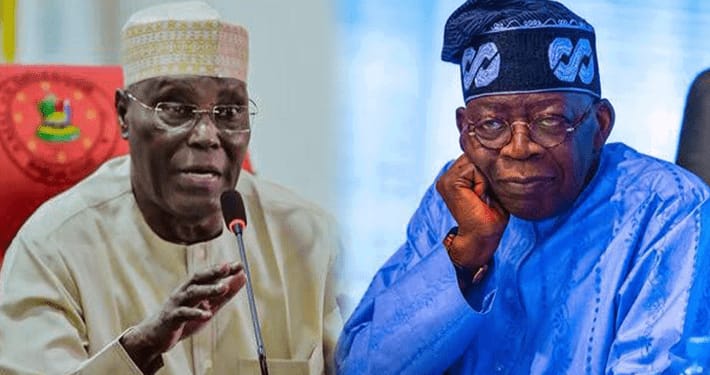
2027: ATIKU MAY BE FACING HIS TOUGHEST ELECTORAL TEST YET
By John Mbonu Uchenwoke-Ekperechi
E-ISSN: 2354-4481
Former Vice-President Atiku Abubakar (1999–2007) may be heading into what could become his most difficult presidential outing in 2027. One of the early political conversations surrounding his ambition is the absence of a publicly identified running mate from the South since the African Democratic Congress (ADC) announced him as its presidential candidate for the 2027 polls.
This contrasts with the relative ease with which regional alliances were built in 2019 and 2023, giving him an array of quality running mates from the South to choose from. Whether symbolic or strategic, the development has fuelled speculation that the South is increasingly reluctant to rally behind another northern presidential candidate after the late President Muhammadu Buhari completed an uninterrupted eight-year (2015-2023) tenure, especially at a time when many Nigerians believe power should remain in the South until 2031, considering that the incumbent, President Bola Ahmed Tinubu, GCFR, of the ruling All Progressives Congress (APC), is from the South.
Beyond personalities, the numbers tell an important story. Electoral patterns from the last two presidential elections (2019 and 2023), contested under the Peoples Democratic Party (PDP), reveal that Atiku's strongest support steadily consolidated in the North-East and North-West, with moderate strength in the North-Central. In contrast, his support across the South weakened significantly, particularly in the South-East and South-South, where the PDP once enjoyed formidable structures.
Below are the figures geopolitically:
Geopolitical Zone
2019 (PDP)
2023 (PDP)
North-West
2,280,465
2,329,802
North-East
1,255,357
1,737,846
North-Central
2,023,769
1,162,087
South-West
1,776,670
941,941
South-East
1,693,485
91,198
South-South
2,233,232
719,908
National Total
11,262,978
6,984,520
The challenge becomes even more pronounced under the African Democratic Congress (ADC), a platform that lacks the southern electoral network and historical presence previously available to Atiku under the PDP. Building new structures in a highly competitive political environment is a demanding task, especially when facing an incumbent political establishment and an opposition movement that continues to enjoy significant youth appeal.
The South-East appears firmly aligned with Peter Obi's political movement. At the same time, the South-South has become increasingly competitive and less predictable but is largely expected to lean toward the Peter Obi-led Nigeria Democratic Congress (NDC). The South-West, traditionally difficult terrain for Atiku, remains dominated by established political interests, particularly the APC, leaving little room for substantial expansion.
Another factor narrowing his path is the enduring influence of Nigeria's informal zoning principle. Although not a constitutional requirement, the expectation that the presidency should remain in the South until 2031 has gained considerable acceptance among both political elites and ordinary voters. This sentiment may reduce enthusiasm for a northern candidacy across southern states, regardless of party affiliation.
While Atiku retains a loyal northern base and decades of political experience, modern presidential elections demand broad national appeal, cross-regional alliances, and the constitutional requirement of securing at least 25 percent of the votes cast in no fewer than two-thirds of the states and the Federal Capital Territory. A strong northern performance alone may not be sufficient to overcome declining southern support and the emergence of multiple opposition centres.
Southern Electoral Verdict
The 2019 and 2023 election figures, as shown above, present a striking electoral reality. In 2019, Atiku Abubakar enjoyed a broad southern coalition, polling 1,776,670 votes in the South-West, 1,693,485 in the South-East, and 2,233,232 in the South-South. These numbers reflected the strength of the PDP's established structures and influential political allies across the region, especially Mr. Peter Obi, his running mate.
By 2023, however, the landscape had changed dramatically. His South-West votes dropped to 941,941, the South-East collapsed to 91,198, while the South-South declined sharply to 719,908. Collectively, his southern support fell from 5,703,387 votes in 2019 to 1,753,047 votes in 2023, representing a loss of nearly 4 million votes. This latter figure may decline further in 2027.
The significance of this trend extends beyond statistics. The 2019 and 2023 campaigns benefited from the PDP's extensive southern network, including governors, party structures, and regional political alliances that helped mobilise voters. Even with those advantages, Atiku's support in the South weakened considerably, largely due to changing political dynamics and the emergence of alternative opposition forces.
Heading into 2027 under the African Democratic Congress (ADC), the electoral environment appears even more challenging. The party lacks the entrenched structures and historical dominance the PDP once enjoyed in many southern states, while informal zoning expectations continue to favour the South retaining the presidency until 2031. At the same time, Peter Obi's influence remains significant in the South-East, South-South, and among many urban and youth voters across the South.
If the voting patterns of 2023 persist and no major political realignment occurs, Atiku's path to rebuilding a competitive southern coalition will be considerably narrower. The figures suggest that his traditional northern strength alone may not be sufficient to offset the substantial erosion of support across the South, making national victory increasingly difficult without a significant resurgence in regions where his electoral base has steadily declined.
Politics, however, remains dynamic, and alliances can change rapidly before election day. Yet, based on current electoral trends, regional voting behaviour, zoning sentiment, and the weakened southern coalition that once complemented his northern strength, Atiku Abubakar's road to the presidency in 2027 appears considerably narrower than in previous contests.
Unless a major political realignment reshapes the national landscape, the former Vice-President may find himself confronting the slimmest pathway to electoral victory of his presidential career under the African Democratic Congress (ADC).
John Mbonu Uchenwoke-Ekperechi
Columnist, Shadows of the Flag | Publisher/Editor-in-Chief, Inside Agwa News
Grassroots mobiliser and political thinker, he writes on governance, leadership, federalism, and accountability in Nigeria and Africa. He questions power and defends citizenship under the shadows of the flag.
Email: [email protected]
Website: www.insideagwa.com
Phone: +2349028847066
Politics
2027: ATIKU MAY BE FACING HIS TOUGHEST ELECTORAL TEST YET
Former Vice-President Atiku Abubakar enters the 2027 presidential race facing significant political and electoral challenges. Drawing on voting patterns from the 2019 and 2023 elections, this analysis explores the erosion of his southern support, the limitations of the ADC's political structure, zoning expectations, and the growing influence of Peter Obi's movement, arguing that the road to victory may be narrower than ever before.

Advertisement

U
Uchenwoke Mbonu Ekperechi
Editor-In-Chief at Inside Agwa News