
A NATION OF CONCUBINAGE
John Mbonu Uchenwoke-Ekperechi
E-ISSN:2354-4481
The phrase “A Nation of Concubinage” captures a troubling metaphor — a state bound not by covenant but by convenience; not by shared destiny but by transactional coexistence. Concubinage historically describes a relationship lacking legitimacy, permanence, and equal recognition. Applied to nationhood, it depicts a country whose components live together without deep mutual commitment, where loyalty is conditional and unity exists more in proclamation than in conviction. Socially, it breeds distrust; politically, instability; economically, inequity; religiously, suspicion; and security-wise, perpetual fragility. Such a nation survives through arrangements rather than ideals.
Nigeria’s uneasy union began not as a negotiated marriage but as an imperial administrative experiment.
On January 1, 1914, British colonial officer Lord Frederick Lugard amalgamated the Northern and Southern Protectorates for economic convenience and administrative efficiency. The North, governed largely through indirect rule under emirs, had earlier been administered by colonial officers such as Sir Percy Girouard, while the South operated under governors like Sir Walter Egerton, with separate administrative structures in the Western and Eastern provinces led by British residents and lieutenant governors. The Eastern Provinces were later supervised through colonial administrative divisions under officials reporting to the Governor-General in Lagos.
This amalgamation ignored big cultural, religious, and political differences among the peoples it fused together. No referendum was held; no national philosophy negotiated. What emerged was not a nation but an arrangement — a political concubinage engineered for imperial profit. Independence Without Integration
At independence on October 1, 1960, Nigeria inherited this fragile structure. The principal political actors reflected regional power blocs rather than national ideological movements.
Dr. Nnamdi Azikiwe, leader of the National Council of Nigerian Citizens (NCNC), symbolized Eastern nationalism.
Sir Abubakar Tafawa Balewa, Prime Minister and leading figure of the Northern People’s Congress (NPC), governed alongside the Northern establishment led by Sir Ahmadu Bello, the Sardauna of Sokoto.
In the West, Chief Obafemi Awolowo commanded the Action Group (AG), advocating federalism and welfarist policies. Internal Western crises later elevated Chief Samuel Akintola, whose political realignment deepened regional instability.
In the East, Dr. Michael Okpara, Premier of Eastern Nigeria, pursued industrial modernization but within an increasingly competitive regional framework.
Rather than forging national cohesion, politics hardened ethnic boundaries. Elections became censuses of tribal loyalty. Governance transformed into competition for federal dominance.
Collapse of the First Republic
The fragile First Republic collapsed under mounting crises: the Western Region political turmoil of 1962, disputed federal elections of 1964, and the controversial Western Region election of 1965, widely remembered as the “Operation Wetie” crisis.
On January 15, 1966, young military officers staged Nigeria’s first coup. Prime Minister Tafawa Balewa, Premier Ahmadu Bello, and Samuel Akintola were assassinated. Major General Johnson Thomas Umunnakwe Aguiyi-Ironsi assumed power, suspending the constitution and attempting to impose a unitary system through Decree No. 34.
The policy intensified Northern fears of domination. A counter-coup followed on July 29, 1966, (The Pogrom), bringing Lieutenant Colonel Yakubu Gowon to power. Ethnic reprisals escalated, culminating in the Nigerian Civil War (1967–1970) after the Eastern Region, under Lt. Colonel Chukwuemeka Odumegwu Ojukwu, declared the Republic of Biafra on May 30, 1967.
The war exposed Nigeria’s deepest contradiction: citizens were willing to die for ethnicity more readily than for the Nigerian state itself.
Military Unity Without Nationhood
Post-war Nigeria remained under military dominance. Gowon’s regime promised reconstruction but postponed democratic transition. On July 29, 1975, Gowon was overthrown in a bloodless coup that brought General Murtala Ramat Mohammed to power. His assassination during the failed coup of February 13, 1976, elevated General Olusegun Obasanjo, who supervised the transition to civilian rule in 1979. The Second Republic (1979–1983) mirrored earlier failures. Political parties — NPN, UPN, NPP, GNPP, and PRP — largely retained regional identities despite national labels.
On December 31, 1983, Major General Muhammadu Buhari overthrew President Shehu Shagari, accusing politicians of corruption and indiscipline. Buhari himself was removed on August 27, 1985, by General Ibrahim Badamasi Babangida, whose regime institutionalized political engineering, annulled the historic June 12, 1993 election won by Chief Moshood Abiola, and deepened public distrust in national institutions. Successive military governments governed through decrees, reinforcing allegiance to rulers rather than to democratic institutions. Unity was enforced administratively but never cultivated emotionally.
The Fourth Republic: Civilianized Concubinage
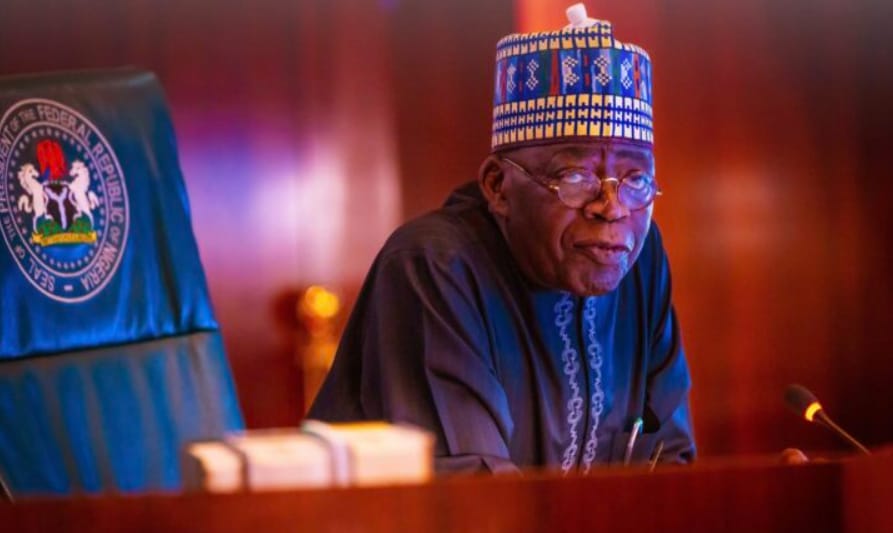
Nigeria’s return to democracy on May 29, 1999, under President Olusegun Obasanjo of the People’s Democratic Party (PDP) was celebrated as a national rebirth. Yet the Fourth Republic inherited military centralization and elite bargaining culture. From Obasanjo (PDP, 1999–2007) to Umaru Musa Yar’Adua (PDP, 2007–2010), Goodluck Jonathan (PDP, 2010–2015), Muhammadu Buhari (APC, 2015–2023), and now President Bola Ahmed Tinubu (APC, 2023–present), governance has often reflected negotiated power arrangements rather than ideological nation-building.
Coalitions form for electoral victory, dissolve after power capture, and reassemble around access to state resources. Appointments become instruments of political balancing; policies are interpreted through ethnic arithmetic; national interest becomes subordinate to elite consensus. Thus, Nigeria operates less like a covenantal republic and more like a prolonged political concubinage — partners cohabiting without shared emotional investment.
The Consequence: Conditional Patriotism
Citizens increasingly anchor loyalty in ethnicity, religion, or region because the state itself struggles to inspire trust. Justice appears selective; equity negotiable; accountability episodic. Patriotism becomes transactional — exchanged for opportunity, protection, or patronage. Economic hardship, insecurity, and perceived political exclusion under the current administration of President Bola Ahmed Tinubu have intensified the long-standing perception that Nigeria remains an arrangement of interests rather than a genuine union of equals.
Beyond Arrangement to Covenant
A nation cannot mature where its founding principles failed to establish moral legitimacy among its constituent peoples. Unity imposed by decree or sustained by political bargaining remains fragile. Nigeria must confront its unresolved questions: restructuring federalism, institutional justice, equitable citizenship, and inclusive governance. True nationhood requires fairness strong enough to command voluntary loyalty.
A genuine union emerges when citizens defend the state not because they must, but because they believe in it.
Until Nigeria transforms from a relationship of convenience into a covenant of shared destiny, it risks remaining — tragically and historically — a nation of concubinage.
John Mbonu Uchenwoke-Ekperechi
Columnist, Shadows of the Flag | Publisher/Editor-in-Chief, Inside Agwa News
Grassroots mobilizer and political thinker, he writes on governance, leadership, federalism, and accountability in Nigeria and Africa. He questions power and defends citizenship under the shadows of the flag.
Email: [email protected]