
Bamidele Seeks Constitutional Safeguard for State Police Funding to Ensure Independence
E-ISSN: 2354-4481
By Philip Orji
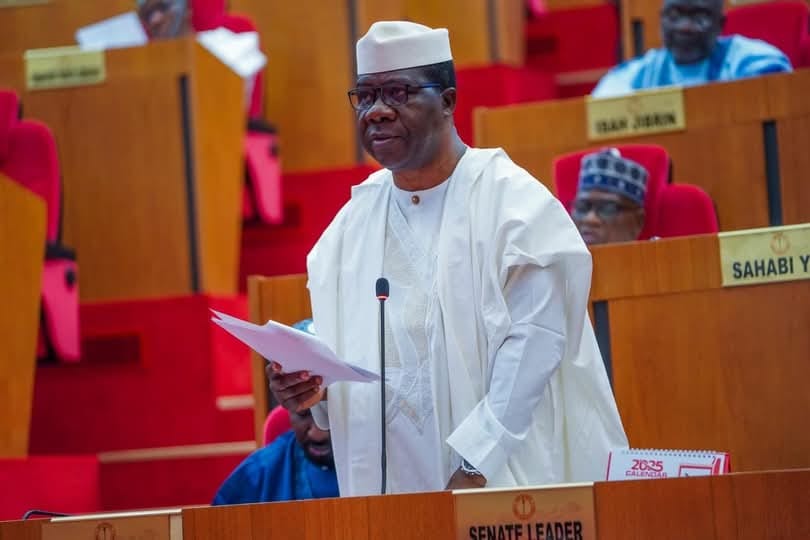
Senator Opeyemi Bamidele has proposed an amendment to the 1999 Constitution to make the funding of Nigeria's proposed state police services a first-line charge, arguing that financial independence is critical to preventing political interference and ensuring the effectiveness of the new security institutions.
Speaking during Senate proceedings on Wednesday, Bamidele said state police would struggle to function professionally if their operations depended entirely on the discretion of state governors through annual budgetary allocations.
According to the lawmaker, guaranteeing statutory funding through the Constitution would shield the proposed police services from undue political influence and allow officers to carry out their constitutional responsibilities without fear or favour.
He argued that security agencies must remain loyal to the Constitution and the rule of law rather than political office holders, stressing that a first-line charge would provide the financial certainty required for operational efficiency.
Bamidele's proposal comes as Nigeria continues to debate the establishment of state police as part of broader constitutional and security reforms aimed at addressing growing insecurity across the country.
For years, calls for decentralised policing have intensified amid rising cases of banditry, kidnapping, terrorism, communal conflicts and other violent crimes that have overwhelmed the country's centrally controlled policing system.
Supporters of state police argue that governors, local authorities and community leaders are better positioned to understand the security challenges within their jurisdictions and can respond more effectively through locally managed police services.
However, opponents have consistently warned that state police could become instruments of political oppression if adequate constitutional safeguards are not put in place to prevent abuse by state governments.
Bamidele acknowledged these concerns, noting that financial autonomy is one of the key safeguards required to protect the integrity of the proposed institutions.
According to him, if governors retain complete control over funding, there is a risk that police operations could be influenced through financial pressure, delayed releases of funds or selective budget approvals.
He maintained that placing state police funding on the first-line charge would reduce such vulnerabilities and strengthen public confidence in the impartiality of the agencies.
The proposal has attracted mixed reactions from constitutional lawyers and security analysts.
Security expert and former presidential adviser on security matters, Dr. Ona Ekhomu, has previously argued that any state policing framework must be backed by clear accountability mechanisms, transparent recruitment processes and adequate funding to avoid institutional weaknesses.
Similarly, constitutional lawyer Mike Ozekhome, SAN, has repeatedly maintained that while state police could improve grassroots security, strong constitutional safeguards must exist to prevent political misuse and protect citizens' rights.
Other analysts believe financial autonomy alone may not be sufficient.
Public affairs analyst Jide Ojo said institutional independence should also include independent police service commissions, transparent appointment procedures and effective legislative oversight at the state level.
According to Ojo, funding guarantees should be complemented by robust accountability systems capable of checking abuse of power.
Civil society organisations have also continued to call for clear operational guidelines governing recruitment, promotions, discipline and citizen complaints to ensure that state police remain professional and accountable.
The debate over state police has gained renewed momentum following ongoing constitutional amendment efforts by the National Assembly.
Successive administrations have acknowledged the limitations of Nigeria's current centralised policing structure, especially given the country's large population, vast territory and evolving security threats.
Several state governors have also renewed calls for constitutional amendments that would permit the creation of state-controlled police services as part of efforts to strengthen internal security.
Although the proposal to establish state police has enjoyed growing political support, lawmakers have continued to emphasise that the framework must include sufficient constitutional checks to prevent abuse.
Bamidele's latest proposal adds another dimension to the ongoing debate by focusing on financial independence as a key pillar of institutional credibility.
If adopted as part of the ongoing constitutional review, the amendment would guarantee direct funding for state police services through constitutionally protected allocations rather than leaving financing solely at the discretion of state governments.
The proposal is expected to form part of broader discussions as the National Assembly continues deliberations on constitutional reforms intended to reshape Nigeria's security architecture and improve public safety nationwide.