
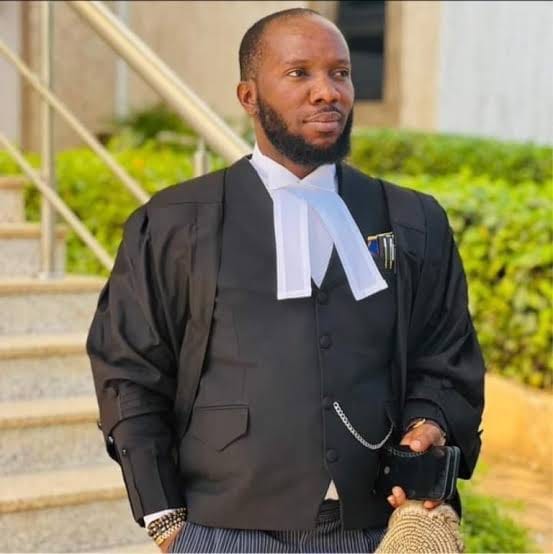
Effiong Faults Police Ban on Filming Officers, Cites Nigerians’ Constitutional Rights
E-ISSN: 2354-4481
By Grace Chidimma Ibe
Human rights lawyer and activist Inibehe Effiong has faulted the Inspector-General of Police, Tunji Disu, over a warning against Nigerians filming police officers for skits, insisting that citizens have a legal and constitutional right to record law enforcement officers while they perform their statutory duties in public.
Effiong stated that the right to record law enforcement personnel was not limited to the Nigeria Police Force, stressing that Nigerians could lawfully film police officers and other law enforcement officials in the course of their public duties.
“Nigerians have the legal right, unmistakably, to record not just the police but law enforcement officers generally,” Effiong said while reacting to the Inspector-General’s position.
The human rights lawyer also questioned the basis for determining whether a person recording an officer was engaged in legitimate content creation, arguing that content creation should not be defined solely by whether the creator derives financial benefits from the activity.
He noted that content could serve different purposes, including public enlightenment, documentation, accountability and information sharing.
Effiong further pointed to the activities of the Nigeria Police Force itself, arguing that the institution also engages in content creation through its official website, social media platforms and radio station.
His comments come amid renewed public debate over the filming of police officers and other law enforcement personnel in public places, particularly following the Inspector-General's warning concerning the use of police officers in skits and other forms of online content.
The controversy has also drawn attention to the broader constitutional question of whether citizens can record public officials while they are carrying out their official responsibilities.
A Federal High Court sitting in Warri, Delta State, in a judgment delivered on March 17, 2026, reportedly affirmed citizens' constitutional right under Section 39 of the 1999 Constitution to film police officers in public.
The judgment further held that harassment of citizens or seizure of their electronic devices merely because they were recording police officers was unlawful.
Section 39 of the Constitution guarantees the right to freedom of expression and the freedom to receive and impart information without interference. The provision has increasingly become relevant in discussions surrounding citizens' use of smartphones and other recording devices to document activities of public officials.
The issue is particularly significant in an era when mobile phones and social media have transformed ordinary citizens into instant witnesses and publishers. Videos recorded by members of the public can provide evidence of incidents involving law enforcement officers, while also contributing to public awareness and accountability.
However, the right to record does not necessarily mean that every form of filming is immune from lawful restrictions. Questions surrounding obstruction of police operations, privacy, public order and the specific circumstances in which recording takes place may still arise depending on the facts of a particular case.
Effiong's position therefore adds to the growing legal and public debate over the balance between police authority and citizens' constitutional freedoms.
As social media continues to play a major role in public communication in Nigeria, the question of whether citizens can document law enforcement activities is expected to remain an important issue in the relationship between the police and the public.
For many Nigerians, the ability to record events involving public officials is regarded as an important accountability mechanism, particularly where allegations of misconduct or abuse of authority arise.