
Northern Governors, Traditional Rulers Convene Emergency Security Summit in Kaduna Over Escalating Insecurity
E-ISSN: 2354-4481
By Onoh Sarah Okwuli
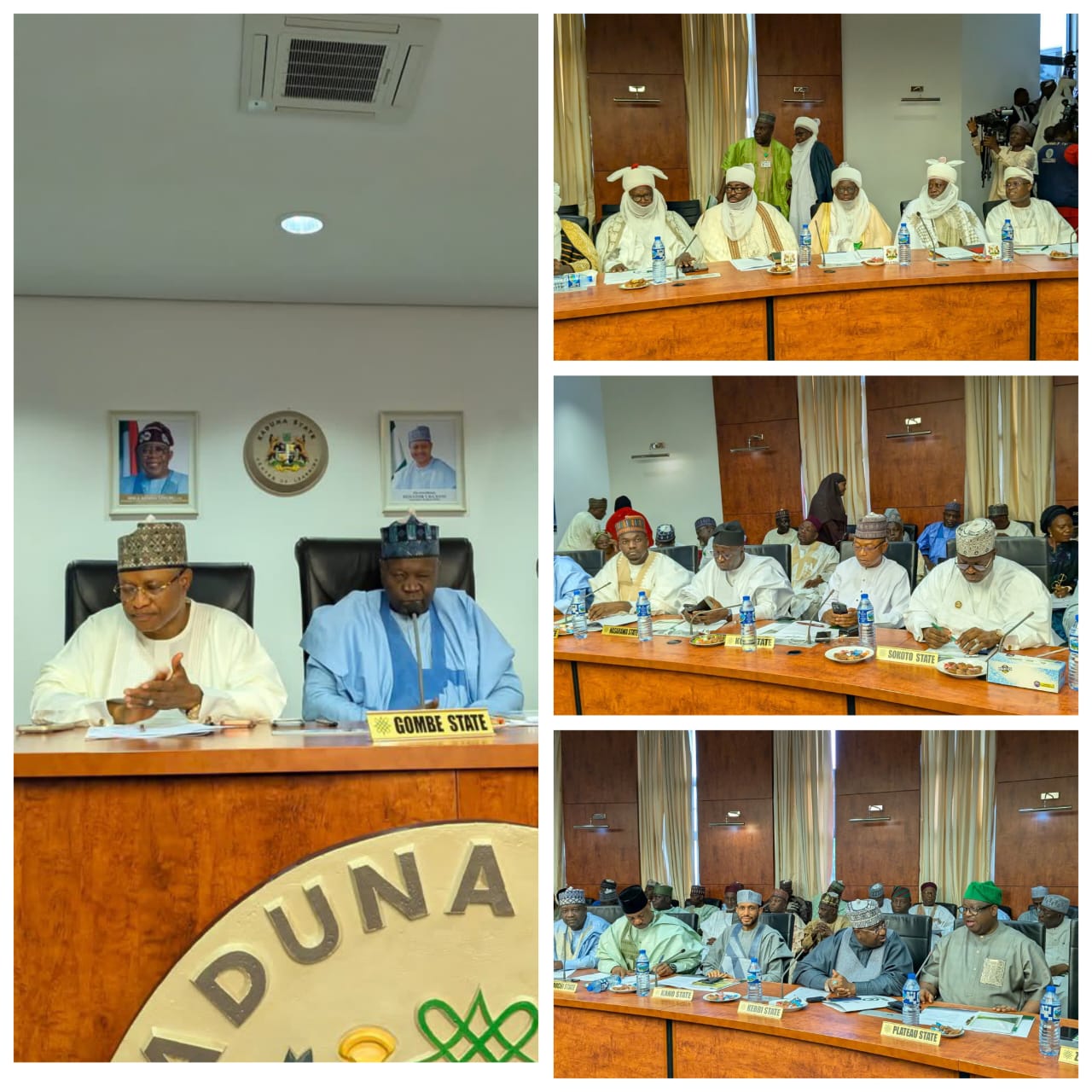
Northern governors and traditional rulers on Wednesday, July 8, 2026, convened an extraordinary emergency security meeting in Kaduna State to deliberate on the worsening security situation across the region amid renewed concerns over persistent banditry, terrorism, kidnappings, and attacks on rural communities.
The high-level meeting, hosted by Kaduna State Governor Uba Sani at the Sir Kashim Ibrahim House, Kaduna State Government House, brought together members of the Northern States Governors' Forum alongside prominent traditional rulers from across the 19 northern states under the leadership of the Sultan of Sokoto.
The session was chaired by the Chairman of the Northern States Governors' Forum and Governor of Gombe State, Muhammadu Inuwa Yahaya, who led discussions focused on strengthening regional collaboration against the growing security threats confronting communities across Northern Nigeria.
The meeting also attracted top federal security officials, including representatives of the Office of the National Security Adviser, the Federal Ministry of Defence, the Nigeria Police Force led by the Inspector-General of Police, and the Department of State Services (DSS), highlighting the Federal Government's interest in finding coordinated solutions to the region's security challenges.
Also in attendance were several respected northern elder statesmen and security experts, including former Inspectors-General of Police, retired senior military, police and paramilitary officers, as well as former Secretaries to the Government of the Federation. Their participation underscored the determination of northern leaders to draw from decades of security and governance experience in addressing the crisis.
Although the meeting was held behind closed doors, discussions were expected to centre on the deteriorating security environment across several northern states, intelligence sharing, improved coordination among security agencies, community-based policing initiatives, and measures to enhance the protection of lives, property, and critical infrastructure.
The emergency gathering comes at a time when many northern states continue to grapple with violent attacks linked to armed bandits, terrorist groups, kidnappers, and other criminal elements. Communities in states such as Kaduna, Katsina, Zamfara, Sokoto, Kebbi, Niger, Borno, Yobe, Plateau and Benue have recorded repeated attacks in recent months, resulting in civilian deaths, displacement of residents, destruction of property, and disruption of farming activities.
Kidnapping for ransom has remained one of the region's most pressing security concerns, with commuters, farmers, students, traditional rulers, and residents of rural communities frequently targeted by criminal gangs. Security analysts have warned that the continued attacks threaten food production, economic activities, and investor confidence while worsening the humanitarian situation across affected areas.
The resurgence of violent attacks has also reignited public debate over the effectiveness of existing security strategies. Civil society organisations, security experts and policy analysts have repeatedly called for stronger intelligence gathering, improved inter-agency coordination, increased deployment of technology in surveillance operations, better welfare for security personnel, and closer collaboration between security agencies and local communities.
Analysts have further argued that while military operations have recorded successes in dismantling several criminal camps, insecurity continues to evolve due to the mobility of armed groups, porous borders, illegal arms proliferation, youth unemployment, weak local intelligence networks, and inadequate policing capacity across vast rural areas. They have urged both federal and state governments to complement kinetic operations with economic development, education, social intervention programmes, and conflict-resolution initiatives capable of addressing the root causes of violence.
Traditional rulers have also continued to play significant roles in local peacebuilding efforts by facilitating dialogue, supporting intelligence gathering, and mobilising communities against criminal activities. Their inclusion in Thursday's meeting reflects growing recognition of the importance of traditional institutions in supporting formal security structures.
Observers believe resolutions from the Kaduna meeting could shape future regional security strategies, especially as northern governors continue to advocate stronger collaboration with federal authorities in tackling terrorism, banditry, kidnapping, communal violence, and other emerging security threats affecting the region.
At the end of the meeting, stakeholders are expected to issue a communiqué outlining key decisions, recommendations, and commitments aimed at restoring peace, improving coordination among security agencies, and enhancing the safety of communities across Northern Nigeria.