
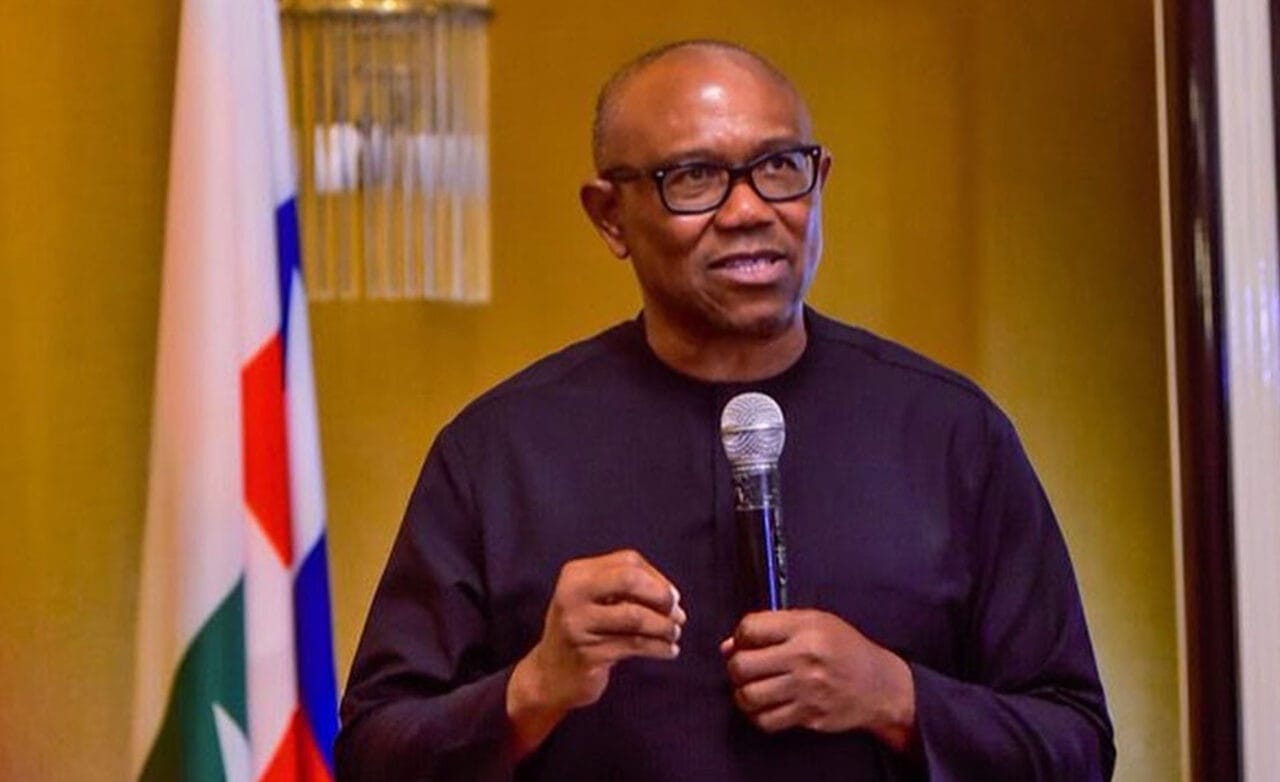
Peter Obi Champions Religious Tolerance, Says Inclusive Leadership Is Key to Nigeria's Unity
E-ISSN: 2354-4481
By Lyon Ngozika Blessings
Former Anambra State Governor and presidential candidate of the National Democratic Coalition (NDC), Peter Obi, has reiterated the need for religious tolerance and inclusive leadership in Nigeria, stating that the country's progress depends on leaders who treat citizens equally regardless of their faith, ethnicity or region.
Obi made the remarks while reflecting on his philosophy of governance, citing examples from his time as governor of Anambra State to demonstrate his commitment to fairness, national unity and equal opportunities for all Nigerians.
According to the former governor, his administration ensured that both Christians and Muslims received equal support in matters of religious obligations. He said his government sponsored Christian pilgrims on pilgrimage while also supporting Muslim faithful undertaking the annual Hajj pilgrimage without discrimination.
Obi maintained that governance should never be influenced by religious or ethnic considerations, stressing that every Nigerian deserves equal treatment under the law.
Speaking further, the former governor noted that his commitment to inclusiveness also extends to appointments into sensitive government positions. He revealed that his Aide-de-Camp (ADC) is a Muslim from Kaduna State, explaining that competence, professionalism and patriotism have always guided his decisions rather than ethnic or religious affiliations.
According to him, Nigeria can only overcome its numerous challenges if leaders focus on merit, national cohesion and the collective interest of the people.
Obi also highlighted his investment in education and social welfare, particularly among vulnerable groups. He disclosed that he currently supports four Almajiri schools, describing education as one of the most effective tools for reducing poverty, insecurity and social inequality.
He argued that improving access to education for disadvantaged children, irrespective of their religious or regional background, remains fundamental to building lasting peace and sustainable national development.
The former governor said that investing in human capital development is not only a moral responsibility but also an economic necessity, urging governments at all levels to prioritize education, healthcare and youth empowerment over politics of division.
Peter Obi served as Governor of Anambra State from 2006 to 2014 and has continued to advocate policies centered on prudent management of public resources, education, healthcare and economic development.
Since leaving office, he has consistently promoted issue-based politics while emphasizing national unity, accountability and inclusive governance. His political philosophy has often focused on reducing ethnic and religious divisions through equitable leadership and merit-based appointments.
Religious tolerance remains a major issue in Nigeria, a country with a population almost evenly divided between Christians and Muslims. Analysts have repeatedly argued that promoting inclusiveness in governance is essential for strengthening national unity and addressing recurring tensions linked to religious and ethnic differences.
Obi's comments come amid ongoing national conversations about leadership, social cohesion and the need for political leaders to embrace diversity in managing the affairs of the country.
Obi's remarks have generated reactions from political observers, civil society groups and supporters who described his comments as a reminder of the importance of inclusive governance in a multicultural society.
Some supporters praised his emphasis on merit over ethnic or religious considerations, arguing that appointments into public offices should be based on competence rather than sectional interests.
Others commended his continued support for Almajiri education, saying investments in vulnerable children could help reduce the number of out-of-school children and contribute to long-term national stability.
However, some political commentators noted that while statements promoting unity are commendable, Nigerians expect political leaders to complement such ideals with practical policies capable of addressing insecurity, unemployment, poverty and educational challenges across the country.
Analysts also observed that issues surrounding religious inclusion and equitable representation are likely to remain central themes in the nation's political discourse as preparations for future elections continue.
Obi maintained that Nigeria's diversity should be viewed as a strength rather than a source of division, insisting that leadership built on justice, fairness and equal opportunities offers the best pathway to national development.
He urged leaders at all levels to place the interests of Nigerians above personal, religious or ethnic considerations, stressing that only inclusive governance can foster lasting peace, unity and sustainable economic growth.