
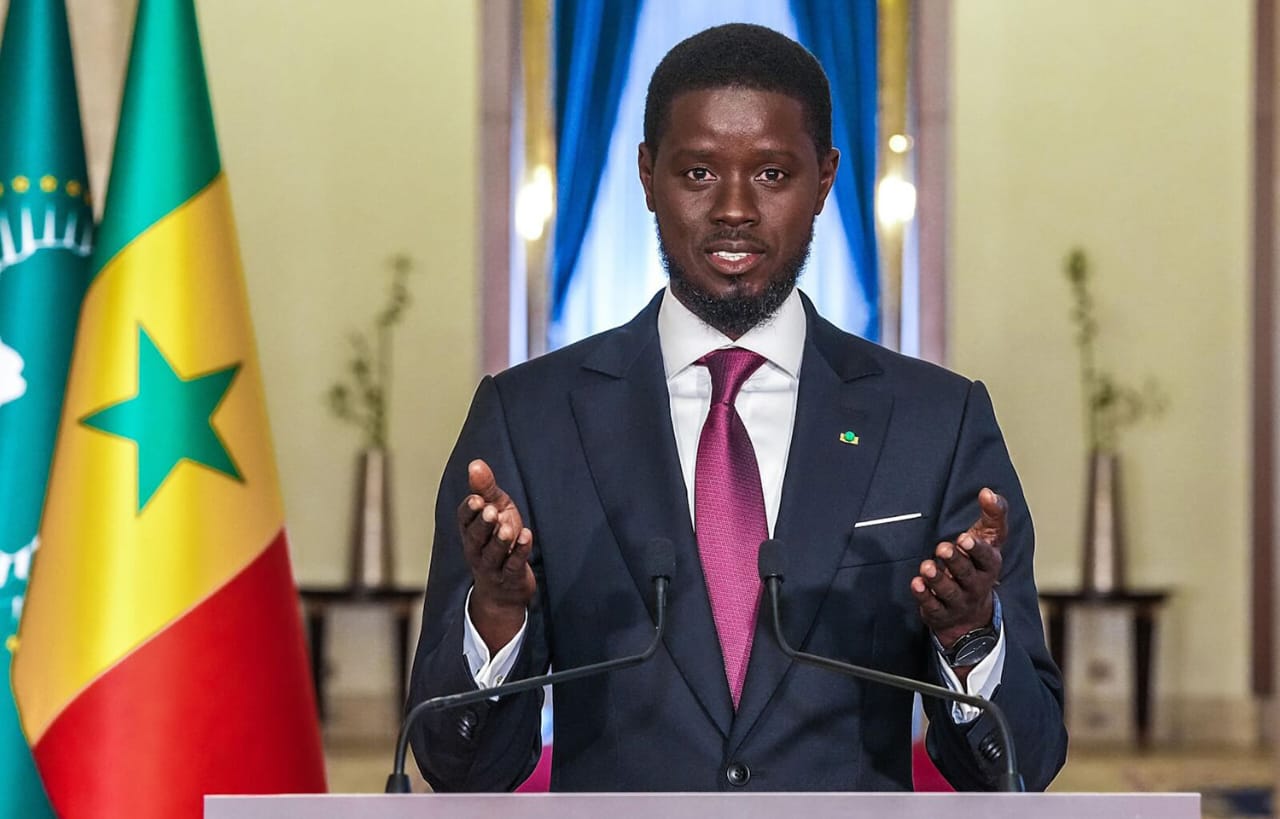
Senegal's Bassirou Diomaye Faye Elected ECOWAS Chairman as West Africa Embraces New Generation of Leadership
E-ISSN: 2354-4481
By Olaedo Nelson Osundu
Senegalese President Bassirou Diomaye Faye has been elected Chairman of the Authority of Heads of State and Government of the Economic Community of West African States (ECOWAS), marking a significant leadership transition for the regional bloc at a time of growing political, security and economic challenges across West Africa.
Faye emerged as the new chairman during the 69th Ordinary Session of the ECOWAS Authority held in Freetown, Sierra Leone, succeeding President Julius Maada Bio of Sierra Leone, who completed his tenure as the regional body's chairman.
The election places the 46-year-old Senegalese leader at the helm of one of Africa's most influential regional organisations, responsible for promoting economic integration, democratic governance, regional peace and collective security among its member states.
In another major decision reached during the summit, leaders also appointed former Senegalese Minister and retired General Birame Diop as the incoming President of the ECOWAS Commission, further strengthening Senegal's influence within the regional institution.
Speaking after assuming office, President Faye pledged to work closely with fellow leaders to deepen regional cooperation, strengthen democratic institutions, improve economic integration and confront the security threats confronting several countries in the sub-region.
His assumption of office comes at a critical period for ECOWAS, which continues to grapple with terrorism and violent extremism across the Sahel, military-led transitional governments in some member states, economic pressures, cross-border crime and efforts to maintain regional unity following tensions with countries that have announced their withdrawal from the bloc.
Political observers believe the emergence of Faye represents more than a routine change in leadership. It signals what many describe as a generational shift in African regional governance.
At just 46 years old, Faye becomes one of the youngest leaders ever to chair ECOWAS. His rise has generated optimism among political analysts, governance advocates and many young Africans who see his election as an opportunity to inject fresh energy, youthful dynamism and innovative thinking into regional decision-making.
Many observers argue that West Africa's rapidly growing youth population requires leadership that better understands the aspirations of younger citizens, particularly in areas such as employment, technology, entrepreneurship, education, democratic participation and inclusive economic growth.
Analysts also note that Faye's reputation for accountability, institutional reforms and transparent governance could positively influence ECOWAS as it seeks to restore public confidence in regional institutions.
Commenting on the development, governance experts described the election as a welcome step towards strengthening competent and visionary leadership within Africa's regional organisations.
Several political commentators said the appointment reflects a broader recognition that Africa's future increasingly depends on leaders capable of balancing democratic values with effective governance while responding decisively to contemporary security and economic realities.
Youth organisations across parts of West Africa also welcomed Faye's emergence, describing it as an encouraging signal that merit, competence and transformational leadership are gradually becoming central considerations in continental politics.
For many observers, the symbolism of a relatively young president assuming leadership of ECOWAS carries significant weight at a time when demands for political renewal continue to grow across Africa.
Founded in 1975, ECOWAS comprises fifteen West African countries and has remained one of the continent's most active regional organisations. Beyond facilitating trade and economic integration, the bloc has played leading roles in conflict resolution, election monitoring, peacekeeping operations, constitutional governance and regional diplomacy.
Over the decades, ECOWAS has intervened in several political crises within the sub-region, helping to restore constitutional order in member states while promoting democratic principles and regional stability.
However, recent years have tested the organisation's cohesion following a series of military coups in parts of West Africa and disagreements over sanctions and democratic transitions. These developments have prompted renewed calls for reforms that would make the organisation more responsive, inclusive and effective.
Observers believe Faye's leadership will be closely watched as he attempts to rebuild trust among member states while strengthening dialogue and cooperation across the region.
His chairmanship is also expected to prioritise regional economic integration through the implementation of trade agreements, infrastructure development, improved intra-African commerce and policies aimed at creating greater opportunities for young people.
Security is expected to remain at the top of the ECOWAS agenda, particularly efforts to combat terrorism, banditry, piracy in the Gulf of Guinea and transnational organised crime.
Diplomatic engagement with countries undergoing political transitions is equally likely to feature prominently during his tenure, as the organisation seeks peaceful pathways toward constitutional governance while preserving regional stability.
The appointment of retired General Birame Diop as President of the ECOWAS Commission further reinforces expectations that Senegal will play a pivotal role in shaping the bloc's policy direction over the coming years.
Together, the emergence of President Bassirou Diomaye Faye as ECOWAS Chairman and General Birame Diop as Commission President has been widely interpreted as a defining moment for Senegal's diplomatic influence within West Africa.
As ECOWAS confronts one of the most challenging periods in its history, many stakeholders believe the new leadership has an opportunity to reposition the organisation, strengthen regional solidarity and restore confidence in its capacity to respond effectively to the aspirations of nearly 450 million West Africans.
For supporters, Faye's election represents not merely a change of leadership but the beginning of a new chapter—one defined by youthful energy, competence, renewed purpose and a commitment to building a more united, peaceful and prosperous West Africa.