
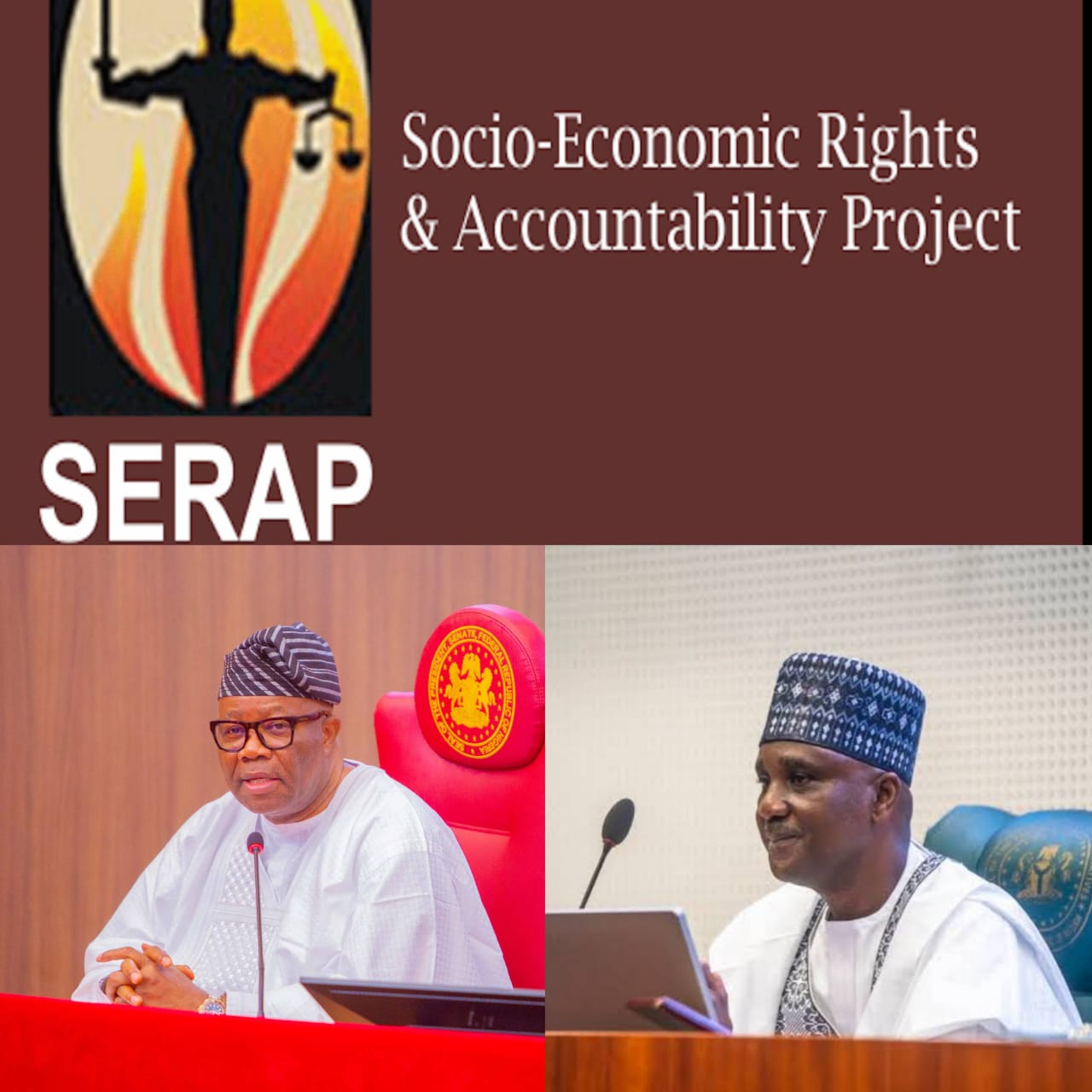
SERAP Demands Akpabio, Abbas Release Documents on ₦1.3bn Allocation to Presidential Councils
E-ISSN: 2354-4481
By Rita Onuoha
ABUJA, Nigeria — The Socio-Economic Rights and Accountability Project (SERAP) has formally called on the leadership of the National Assembly to immediately release certified copies of all documents relating to the allocation of more than ₦1.3 billion to the Presidential Foreign Intervention Promotion Council and the Presidential Economic Advisory Council in the 2026 Appropriation Act.
The organization's request, addressed to Senate President and Speaker of the House of Representatives , seeks full disclosure of records concerning the budgetary provision of ₦1,302,978,784 approved for the two presidential bodies.
According to SERAP, making the documents publicly available is necessary to enable Nigerians to understand the legal basis, justification and intended use of the funds. The organization argued that transparency in public finance is a constitutional obligation and an essential safeguard against abuse of public resources.
The rights group maintained that citizens have a legitimate right to know how public funds are appropriated and whether allocations to presidential advisory and intervention bodies comply with existing laws and principles of prudent financial management.
SERAP further stressed that openness in the budgeting process strengthens democratic governance, promotes public confidence in government institutions and enables effective oversight of public expenditure. It noted that withholding information on such allocations would undermine accountability and weaken public trust in the nation's fiscal management.
The request comes amid growing public concern over transparency and accountability in the operations of the 10th National Assembly. In recent months, civil society organizations, governance advocates and many Nigerians have repeatedly questioned several spending decisions and have called for greater openness in the legislative budgeting process.
Across social media and public policy discussions, many Nigerians have expressed frustration over what they describe as limited transparency surrounding government expenditures. Some citizens argue that, at a time of economic hardship, rising inflation and increasing cost of living, every naira of public funds should be subjected to rigorous scrutiny and public disclosure.
Others believe that the National Assembly should proactively publish detailed budget documents, committee reports and expenditure justifications to eliminate suspicion and reinforce confidence in democratic institutions. Many citizens also contend that greater openness would reduce speculation, strengthen legislative credibility and demonstrate commitment to accountability.
Governance advocates have continued to insist that transparency is not merely a legal requirement but a cornerstone of democratic leadership. They argue that public institutions, particularly the National Assembly, must lead by example by ensuring that budget approvals and appropriations remain open to public examination.
Political observers say SERAP's latest demand is likely to renew national debate on fiscal responsibility, access to public information and the role of the legislature in ensuring accountability for the management of public resources.
As of the time of filing this report, neither the Office of the Senate President nor the Office of the Speaker of the House of Representatives had publicly responded to SERAP's request.