
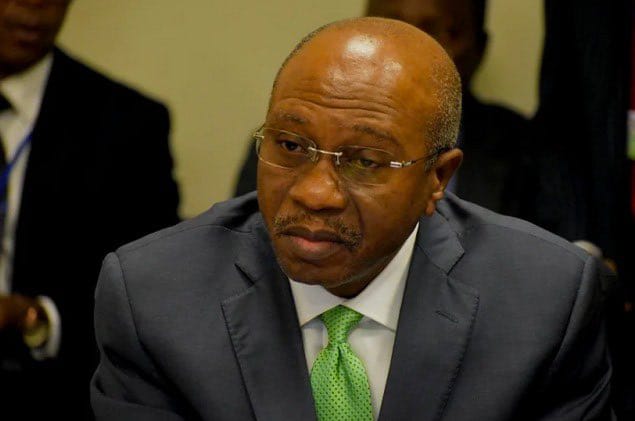
Supreme Court Orders Final Forfeiture of Seven Luxury Properties Linked to Emefiele
E-ISSN: 2354-4481
By Livinus Ozonai Chimere
The Supreme Court has ordered the final forfeiture of seven luxury properties linked to the immediate past Governor of the Central Bank of Nigeria (CBN), Godwin Emefiele, bringing to a close a protracted legal battle over the ownership of the high-value assets.
In a unanimous judgment delivered by a five-member panel led by Justice Ibrahim Saulawa, the apex court set aside the earlier decision of the Court of Appeal, which had ordered a retrial of the forfeiture proceedings. The Supreme Court restored the judgment of the Federal High Court in Lagos, which had granted the Economic and Financial Crimes Commission (EFCC) final forfeiture of the properties to the Federal Government.
The ruling effectively ends Emefiele's challenge against the seizure of the luxury properties, marking another significant legal victory for the anti-graft agency in its efforts to recover assets believed to be proceeds of unlawful activities.
Although the Supreme Court's judgment focused on the legal validity of the forfeiture proceedings, it reinforces the powers of law enforcement agencies to seek the confiscation of assets where the courts are satisfied that they cannot be legitimately accounted for under existing laws.
The EFCC had approached the Federal High Court seeking interim and later final forfeiture of the properties after investigations allegedly linked them to illicitly acquired wealth. The commission argued that the assets were held through proxies and could not be justified by legitimate sources of income.
Following the Federal High Court's decision in favour of the EFCC, Emefiele challenged the ruling at the Court of Appeal, which nullified the forfeiture order and directed that the matter be reheard by another judge. Dissatisfied with that outcome, the EFCC appealed to the Supreme Court.
The apex court has now ruled that the Court of Appeal erred in ordering a retrial, thereby restoring the original forfeiture order issued by the Federal High Court.
The judgment comes as Emefiele continues to face several criminal charges before different courts over alleged abuse of office, procurement fraud, conspiracy and other financial crimes. He has consistently denied all allegations against him.
Public affairs analysts described the Supreme Court's decision as a landmark judgment that underscores the importance of judicial accountability and the fight against corruption.
Abuja-based governance analyst, Dr. Kabiru Yusuf, said the verdict demonstrates that anti-corruption institutions can successfully pursue complex financial crime cases through the judicial process.
According to him, the decision sends a strong message that public officials entrusted with managing national resources will be held accountable where there is sufficient legal basis for asset recovery.
Similarly, constitutional lawyer and policy analyst, Barrister Chijioke Nnadi, noted that while the judgment strengthens Nigeria's anti-corruption framework, it also highlights the need for investigators to ensure that all forfeiture proceedings strictly comply with due process.
He said public confidence in the justice system depends on transparent investigations and fair judicial hearings, stressing that the courts remain the ultimate arbiters in disputes involving alleged illicit assets.
Another public affairs commentator, Amina Bello, observed that the ruling could encourage greater public trust in ongoing efforts to recover public assets allegedly diverted through corruption.
She, however, urged government agencies to ensure that recovered assets are transparently managed and deployed for public benefit to reinforce citizens' confidence in anti-corruption initiatives.
Godwin Emefiele served as Governor of the Central Bank of Nigeria from June 2014 until his suspension by President Bola Tinubu in June 2023.
Following his removal from office, he became the subject of multiple investigations by the EFCC and other security agencies over allegations bordering on financial misconduct and abuse of office during his tenure at the apex bank.
Among the controversies surrounding his administration were the implementation of the naira redesign policy, intervention funds, foreign exchange management, procurement processes and alleged acquisition of assets through proxies.
The EFCC subsequently initiated several civil forfeiture proceedings to recover properties it alleged were proceeds of unlawful activities. Some of the applications resulted in interim forfeiture orders before the courts eventually granted final forfeiture after considering the evidence presented.
The Supreme Court's latest decision represents one of the most consequential judicial pronouncements arising from those investigations and is expected to influence future asset recovery cases involving former public officials.
With the apex court having delivered its final verdict, ownership of the seven luxury properties now legally vests in the Federal Government, subject to the applicable laws governing the management and disposal of forfeited assets.