

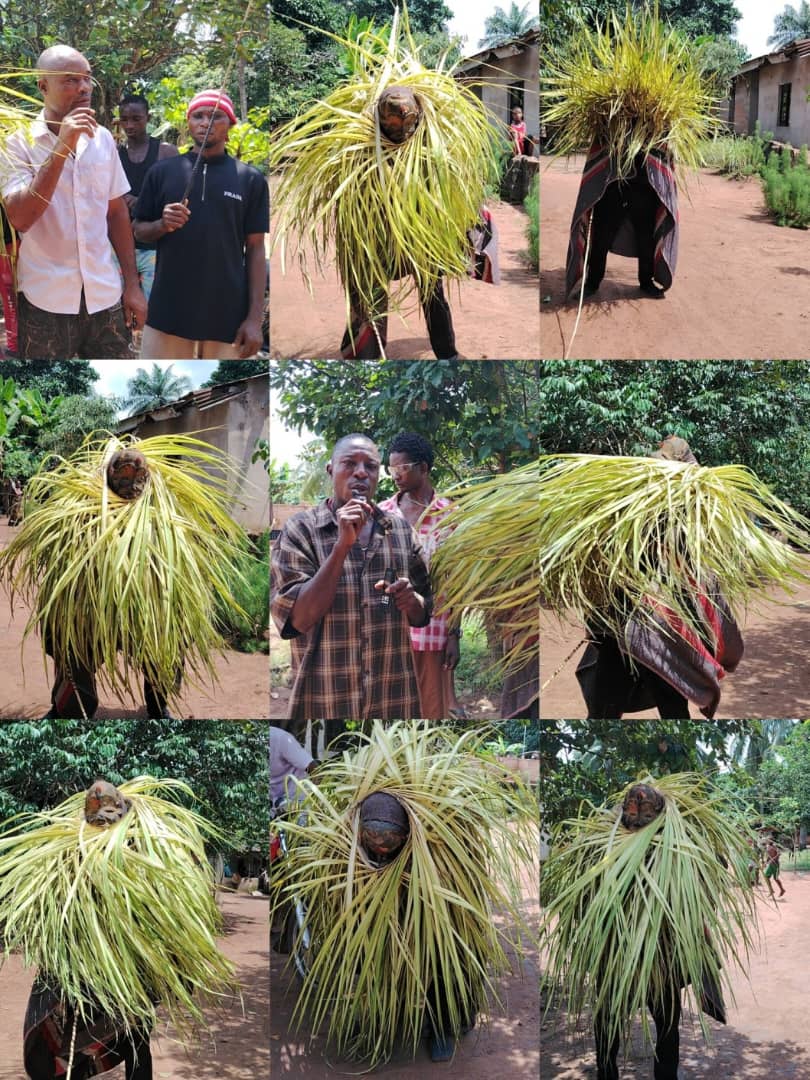
The Umuofeke Agwa Ota Okpukpu Masquerade: A Living Symbol of Ancestral Heritage
E-ISSN: 2354-4481
By Anyiam Michael Uzochukwu
In many parts of Igboland, masquerades occupy a sacred place as visible expressions of ancestral heritage, communal identity, and indigenous spirituality. Among the people of Agwa Clan in Oguta Local Government Area of Imo State, the Ota Ukpukpu masquerades are not merely entertainers; they are revered cultural institutions that announce the arrival of one of the community's most cherished traditional seasons—the Owu-Okoroshi Festival, which precedes the annual New Yam Festival celebrated in August.
One of the finest expressions of this ancient tradition is the Umuofeke Agwa Ota Okpukpu Masquerade, a remarkable cultural symbol whose unique appearance, graceful movements, and spiritual significance continue to preserve the identity and heritage of the Agwa people.
Palm Fronds: The Sacred Costume of Agwa Masquerades
An observer unfamiliar with Agwa traditions may wonder why nearly every masquerade within the clan is clothed almost entirely with fresh palm fronds. This is not an accidental cultural feature, nor is it simply an artistic preference. Rather, it is a carefully preserved ancestral tradition rooted in the symbolic significance of the palm frond (Omu) within Igbo cosmology.
Indeed, about 99 percent of masquerades across Agwa Clan are adorned with palm-frond costumes, reflecting a long-standing cultural understanding of the palm tree as a sacred symbol connecting humanity with the spiritual realm.
In traditional Igbo belief, the palm frond represents purity, sacred authority, peace, and divine protection. It is frequently employed in traditional worship, ancestral rites, covenant ceremonies, and sacred spaces where ordinary human activities give way to spiritual observance. By clothing the masquerade in fresh palm fronds, the ancestors symbolically distinguish it from ordinary mortals, presenting it instead as a respected intermediary between the living community and ancestral spirits.
The palm-frond attire therefore communicates far more than beauty; it proclaims holiness, reverence, renewal, and the sacred responsibilities attached to the masquerade institution.
Heralding the Owu-Okoroshi Festival
Like every Ota Okpukpu masquerade across Agwa Clan, the Umuofeke Uta Okpukpu, serves as one of the earliest public appearances announcing the beginning of the annual Owu-Okoroshi Festival, an important traditional celebration that prepares the community spiritually and culturally for the New Yam Festival.
Although the Umuofeke masquerade shares the same cultural mission with the famous Wa Okpa Uta (Otakpukpu) Mgbala masquerade, it possesses its own distinctive costume, dance style, rhythm, movements, and mannerisms. These unique characteristics distinguish each community's identity while preserving the common ancestral philosophy that binds the entire Agwa Clan.
Every graceful movement of the masquerade carries the spirit of generations past. Its dance is not merely entertainment but a cultural language through which the ancestors communicate values of unity, discipline, reconciliation, communal harmony, and celebration. The atmosphere created by its appearance is one of excitement, dignity, and spiritual reverence.
A Festival of Peace and Reconciliation
One remarkable aspect of the Owu-Okoroshi Festival is its emphasis on peaceful coexistence. During the festival period, the cultural spirit of Okoroshi strongly discourages quarrelling, violence, and the spilling of human blood. The community embraces reconciliation, forgiveness, mutual respect, and peaceful interaction as sacred obligations.
The Umuofeke Ota Okpukpu masquerade therefore becomes a cultural ambassador of peace. Through its presence, dances, and interactions with the people, it reminds families and neighbours that communal harmony remains one of the greatest pillars of Agwa civilization.
The festival equally promotes generosity, hospitality, love, and communal sharing, values that have sustained Agwa society for centuries.
The 2026 Cultural Outing
During the 2026 Owu-Okoroshi Festival, the Umuofeke Ota Okpukpu masquerade performed on Orie Market Day (26 June 2026) and Afor Market Day (27 June 2026).
In keeping with ancient custom, the masquerade danced through the community while paying ceremonial visits to the homes of Owu-Okoroshi custodians and respected elders entrusted with preserving the tradition. These visits were not ordinary social calls but symbolic acknowledgements of the custodians whose responsibility is to safeguard the cultural heritage for future generations.
Such traditions reinforce continuity between generations and demonstrate that Agwa culture remains alive despite the pressures of modernization.
Symbolism of the Costume
Unlike masquerades decorated with colourful fabrics, beads, or elaborate ornaments, the Umuofeke masquerade derives its beauty from simplicity and symbolism.
Its flowing layers of fresh green and pale-yellow palm fronds represent:
Purity and spiritual holiness.
Fertility, growth, and agricultural abundance.
Prosperity and communal wellbeing.
Peace and reconciliation.
Harmony between humanity, nature, and the ancestral world.
Beneath the palm-frond covering lies a dark costume that completely conceals the performer. This concealment is deliberate. Within Agwa tradition, the masquerade is regarded not as an ordinary human being but as the visible manifestation of ancestral presence during sacred festivals. Its carved wooden mask similarly represents ancestral authority, wisdom, continuity, and spiritual identity.
Preserving Indigenous Craftsmanship
Behind every outing of the Umuofeke masquerade lies an impressive display of indigenous craftsmanship. Traditional artisans carefully select durable hardwood from which the mask is carved by hand. Each carving reflects generations of inherited artistic knowledge passed from master craftsmen to apprentices.
Fresh palm fronds are harvested shortly before the festival to preserve their freshness and vibrant appearance. Skilled custodians then weave and arrange the fronds into the distinctive costume using traditional techniques that have survived for centuries.
Because fresh palm leaves naturally dry with time, the entire costume must be renewed before each major outing, making every appearance both unique and authentic. This craftsmanship represents one of Agwa's enduring contributions to Nigeria's rich cultural heritage.
Children, Tourism and Community Identity
Beyond its spiritual significance, the Umuofeke Ota Okpukpu, masquerade contributes immensely to community life.
For children, the sight of the masquerade brings excitement, happiness, physical activity, and memorable cultural experiences. As the masquerade dances through the village, children joyfully follow its movements, creating cherished memories that strengthen their attachment to their cultural roots.
For adults, the festival reinforces community identity, masculinity, courage, discipline, and collective responsibility.
The masquerade also possesses considerable tourism potential. Visitors from neighbouring communities and beyond are attracted by the spectacular performances, colourful traditions, indigenous music, and rich cultural atmosphere. Properly promoted, the Owu-Okoroshi Festival could become one of the significant cultural tourism attractions in Imo State.
Preserving a Living Heritage
As globalization and modernization continue to reshape societies, traditions such as the Umuofeke Agwa Ota Okpukpu, Masquerade remain invaluable living museums of Igbo civilization.
They preserve indigenous history, oral traditions, sacred symbolism, craftsmanship, music, dance, and community values while educating younger generations about the identity of their ancestors.
Far beyond folklore, the masquerade embodies the philosophy that culture survives only when communities actively preserve and celebrate it.
The people of Umuofeke Agwa, through their continued commitment to the Owu-Okoroshi Festival, demonstrate that ancestral heritage remains a source of dignity, unity, and pride.
In celebrating the Umuofeke Ota Okpukpu masquerade, Agwa Clan is not merely preserving an ancient custom; it is safeguarding a living legacy that continues to speak across generations, reminding the world that a people who honour their heritage secure the future of their identity.