
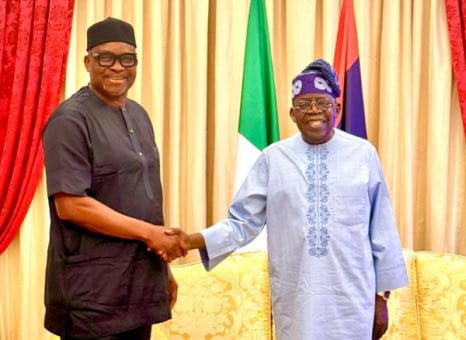
Tinubu Appoints Fayose as REA Chairman, Names 25 Others to Key Federal Agencies
E-ISSN: 2354-4481
By Murphy Ebemere
President Bola Ahmed Tinubu has approved the appointment of former Ekiti State Governor, Ayodele Fayose, as Chairman of the Rural Electrification Agency (REA), alongside 25 other appointments into 10 strategic Federal Government agencies and commissions.
The appointments, which take immediate effect, are part of the administration's ongoing efforts to strengthen governance, improve institutional efficiency and accelerate the delivery of public services across critical sectors of the Nigerian economy.
According to the appointment list, Fayose will serve as Chairman of the Rural Electrification Agency Board. He will work alongside non-executive directors Alhaji Ahmadu Abubakar and Engineer Ilyasu Ibrahim Makinta, while the agency's Director-General, Abba Abubakar Aliyu, and three previously appointed Executive Directors will continue as members of the board.
The Rural Electrification Agency is responsible for expanding electricity access to underserved and rural communities across Nigeria through off-grid and renewable energy initiatives, a sector considered vital to the Federal Government's economic development agenda.
President Tinubu also constituted the leadership of the National Salary and Wages Commission, appointing Major General Junaid Bindawa as Chairman and former Lagos lawmaker Olajumoke Okoya-Thomas as Secretary.
Other members of the commission include Commissioners Dr. Ogbole Ene Lilian, Oladele Olatubosun from Oyo State and Yakubu Umar Barde from Kaduna State. Additional members are Dr. Mai Adamu Yau of Borno State, Ginika Florence Tor from Enugu State, Engineer Lawrence Okoh of Edo State and Bello Morenike Iyabode from Kogi State.
In another appointment, Tosin Johnson Adeyanju was named Secretary of the Revenue Mobilisation, Allocation and Fiscal Commission after serving as Executive Secretary of the National Lottery Trust Fund.
Dr. Abuh Mohammed was appointed Director-General of the National Population Commission, while Dr. Akinola Odeyemi emerged as the new Managing Director of the Nigerian Bulk Electricity Trading Plc (NBET).
President Tinubu also approved the appointment of Dr. Anthony Inalegwu Godwin as Chairman and Chief Executive Officer of the Nigeria Atomic Energy Commission.
At the National Centre for Agricultural Mechanisation (NCAM) in Ilorin, Kwara State, Engineer Julius Oloro was appointed Chief Executive Officer, succeeding the late Dr. A. R. Kamal.
Similarly, Dr. Abdullahi Maikano Saidu was named Chairman of the Fiscal Responsibility Commission. Other members of the commission include Mohammed Asmau, Mohammed Aliyu Makama, Dr. Suleiman Gidado, Louis O. Ndukwe, Amaechi Ugwele and Olaniyi Idowu Onikola.
The President further appointed Shuni Muhammad Dahiru as Executive Secretary of the National Commission for Mass Literacy, Adult and Non-Formal Education, replacing Professor Shu'aibu Shehu Aliyu.
At the Federal Housing Authority, Gisaor Vincent Iorja was appointed Executive Director for Finance. Iorja is an economist, legal scholar and currently serves as Secretary of the Benue State Independent Electoral Commission.
The latest appointments come as the Tinubu administration continues to reposition government institutions with new leadership expected to drive reforms, enhance transparency and improve service delivery across strategic sectors including energy, agriculture, education, housing, fiscal management and population planning.
PDP Reacts
The Peoples Democratic Party (PDP) welcomed the appointment of former Ekiti State Governor Ayo Fayose, describing it as recognition of his experience in public administration and governance.
Some party stakeholders noted that Fayose's emergence demonstrates that competence and administrative experience remain valuable assets in national development, regardless of political affiliation. They expressed hope that he would deploy his leadership experience to support rural electrification projects that would improve livelihoods and stimulate economic activities in rural communities.
Opposition and Public Reactions
However, the appointments have generated mixed reactions from opposition figures and political observers.
While some analysts described the appointments as part of the President's constitutional responsibility to assemble capable leadership for federal institutions, others argued that government appointments should continue to reflect merit, transparency, federal character and inclusiveness.
Energy policy experts also stressed that the success of the Rural Electrification Agency under its new leadership would ultimately be measured by improvements in electricity access for millions of Nigerians living in rural communities rather than political considerations.
Across social media, reactions remained divided. Supporters of the administration applauded the appointments as a strategic move to strengthen governance, while critics urged the new appointees to prioritize accountability, efficient service delivery and tangible results in their respective agencies.
With the appointments taking immediate effect, attention is expected to shift toward the implementation of government policies and the performance of the newly constituted leadership teams as Nigerians look forward to improved service delivery across the affected institutions.