
U.S. Withdraws Majority of Troops from Nigeria After Completing Joint Counterterrorism Mission
E-ISSN: 2354-4481
By Grace Chidimma Ibe
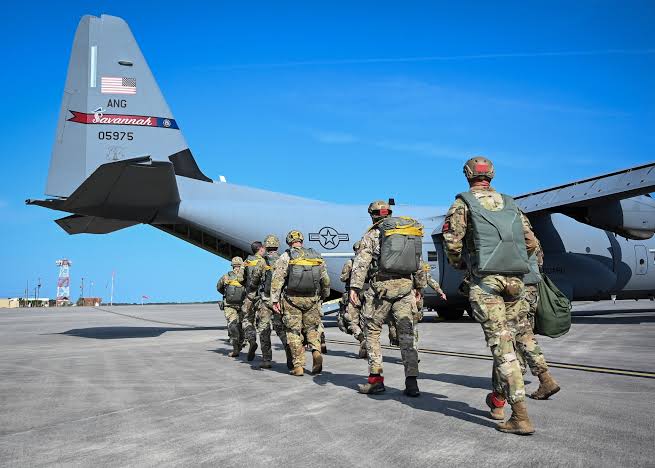
The United States has withdrawn the majority of its military personnel from Nigeria following the successful completion of a joint counterterrorism mission conducted in the Lake Chad Basin, marking a new phase in security cooperation between both countries.
The announcement was made by General Dagvin R.M. Anderson, commander of U.S. Air Forces in Europe–Air Forces Africa, who explained that the mission achieved its primary objectives and has now formally concluded. According to him, the operation represented a coordinated effort between U.S. and Nigerian security forces in tackling terrorist threats across the region.
One of the mission's most significant achievements was the reported elimination of Abu-Bilal al-Minuki, identified by U.S. officials as the second-in-command of ISIS in the region, during an operation carried out in May 2026. The development has been described as a major milestone in ongoing efforts to weaken extremist networks operating within the Lake Chad Basin.
Despite the drawdown of U.S. troops, General Anderson emphasized that Washington remains firmly committed to its longstanding security partnership with Nigeria. He noted that the United States will continue to provide intelligence sharing, strategic support, training, and other forms of security cooperation whenever requested by the Nigerian government.
The U.S. commander explained that the current approach prioritizes strengthening the operational capacity of Nigerian security forces rather than maintaining a large, permanent American military presence. He stated that the United States will focus on providing specialized capabilities and technical assistance that enable local forces to independently address evolving security challenges.
The latest development reflects the evolving nature of U.S.-Nigeria defence relations, with both countries continuing to collaborate in combating terrorism, violent extremism, and regional insecurity through partnership, intelligence cooperation, and capacity building.