
Uzodimma Approves ₦25bn Judges' Quarters, ₦1.9bn CBT Centres, Launches Digital Signage Initiative in Imo
E-ISSN: 2354-4481
By Dickson Obinna
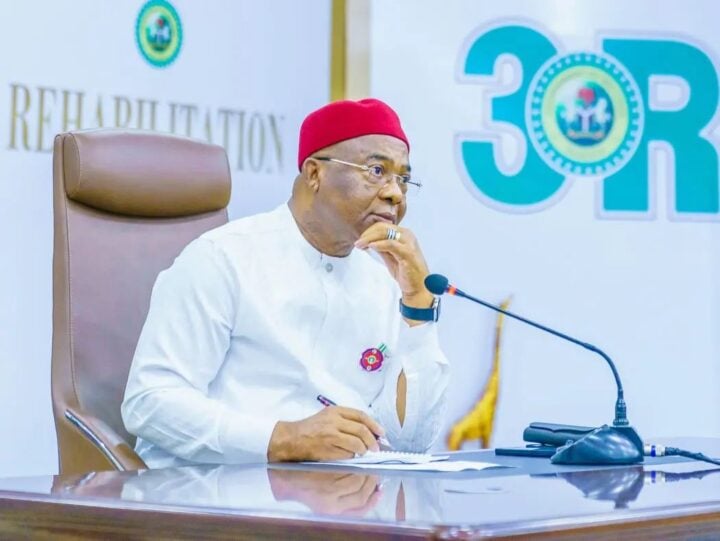
Governor Hope Uzodimma has approved the construction of modern residential quarters for judges in Imo State at a cost of ₦25 billion, as part of a series of major decisions taken during the State Executive Council (EXCO) meeting held on Monday at the Government House, Owerri.
The approval formed part of several resolutions aimed at strengthening the state's judicial system, expanding educational infrastructure, advancing digital transformation, and addressing environmental challenges.
Briefing journalists after the meeting, the Commissioner for Information, Public Orientation and Strategy, Hon. Chief Declan Emelumba, said the proposed Judges' Quarters would consist of 40 standard duplexes fitted with modern recreational facilities to improve the welfare and living conditions of judicial officers serving in the state.
According to Emelumba, the project reflects Governor Uzodimma's commitment to creating a conducive working environment for members of the judiciary, which is regarded as one of the critical arms of government.
He explained that providing quality accommodation for judges would not only improve their welfare but also strengthen institutional independence and enhance the effective administration of justice in Imo State.
The Executive Council also approved ₦1.9 billion for the establishment of four Computer-Based Test (CBT) centres across Orlu Zone to improve access to digital examination facilities for candidates writing the Unified Tertiary Matriculation Examination (UTME) conducted by the Joint Admissions and Matriculation Board (JAMB).
As part of the project, the government approved the immediate release of ₦900 million to commence work on the pilot centres located at Bishop Shanahan Secondary School and Community Secondary School, Omuma, in Oru-East Local Government Area.
The initiative is expected to reduce the burden on students who currently travel long distances to access accredited CBT centres while increasing examination capacity within the zone.
In another major policy decision, the Executive Council approved the establishment of Imo Signage Asset Management Limited (IMSAML) under a Public-Private Partnership (PPP) arrangement.
The new company will oversee outdoor advertising across the state while deploying smart digital billboards powered by Internet of Things (IoT) technology.
Providing additional details, the Commissioner for Digital Economy, Dr. Chimezie Amadi, disclosed that the project would be fully financed by private investors without placing any financial burden on the state government.
He said the initiative is designed to modernise outdoor advertising, improve regulatory efficiency, boost internally generated revenue, and position Imo as one of Nigeria's leading digitally driven states.
The Council also directed the immediate implementation of measures to tackle the worsening erosion affecting several communities across Imo State.
Although no specific financial allocation was announced for the intervention, government officials acknowledged that erosion remains one of the state's major environmental challenges, threatening roads, homes, farmlands and public infrastructure in many local government areas.
The meeting also featured the swearing-in of Chief Longers Anyanwu as the new Commissioner for Agriculture.
Speaking shortly after taking the oath of office, Anyanwu thanked Governor Uzodimma for the confidence reposed in him and pledged to support the administration's agricultural transformation agenda.
Describing himself as a member of the APC "winning team," he assured residents that he would work diligently to improve agricultural productivity, encourage food security and contribute meaningfully to the socio-economic development of the state.
Since assuming office in 2020, Governor Uzodimma's administration has consistently prioritised infrastructure development, digital transformation and institutional reforms.
The state government has invested in road rehabilitation, healthcare, education, urban renewal and digital governance, while also pursuing policies aimed at improving internally generated revenue and attracting private investment.
The approval for judges' residential quarters follows broader national conversations on improving judicial welfare. Across Nigeria, legal professionals have repeatedly advocated better remuneration, security and accommodation for judicial officers as part of efforts to strengthen the independence and efficiency of the judiciary.
Similarly, the establishment of additional CBT centres aligns with the increasing digitisation of examinations by JAMB and other national examination bodies, which has increased demand for accredited facilities across the country.
Public Reactions
The approvals have generated mixed reactions among residents and stakeholders.
Many legal practitioners welcomed the judges' housing project, describing it as a significant investment in the judiciary that could improve morale, security and institutional independence.
Education stakeholders also praised the approval of new CBT centres, noting that candidates from Orlu Zone have often faced difficulties travelling to distant locations to sit for examinations.
However, some residents argued that while the projects are commendable, greater attention should also be directed towards rural roads, healthcare facilities, electricity supply, job creation and erosion control, which they described as immediate concerns affecting many communities.
Others called for transparency in the implementation of all approved projects, urging the government to ensure timely completion and prudent management of public resources.
With the latest approvals, the Uzodimma administration says it is consolidating efforts to modernise governance, improve public infrastructure and enhance service delivery across Imo State, while expanding opportunities in education, technology and the justice sector.